Spoiler alert: Hollywood’s remakes don’t yield better films
A recent conversation sparked fresh annoyance with the seemingly unchallenged Hollywood propaganda success for the idea film is somehow the best medium for the realization of any idea. It’s not. Whether a scene in a comic-book-based movie is good or not is entirely beside the point. To me, if filmmakers can put together good scenes, their abilities would be put to much better use pursuing original works.
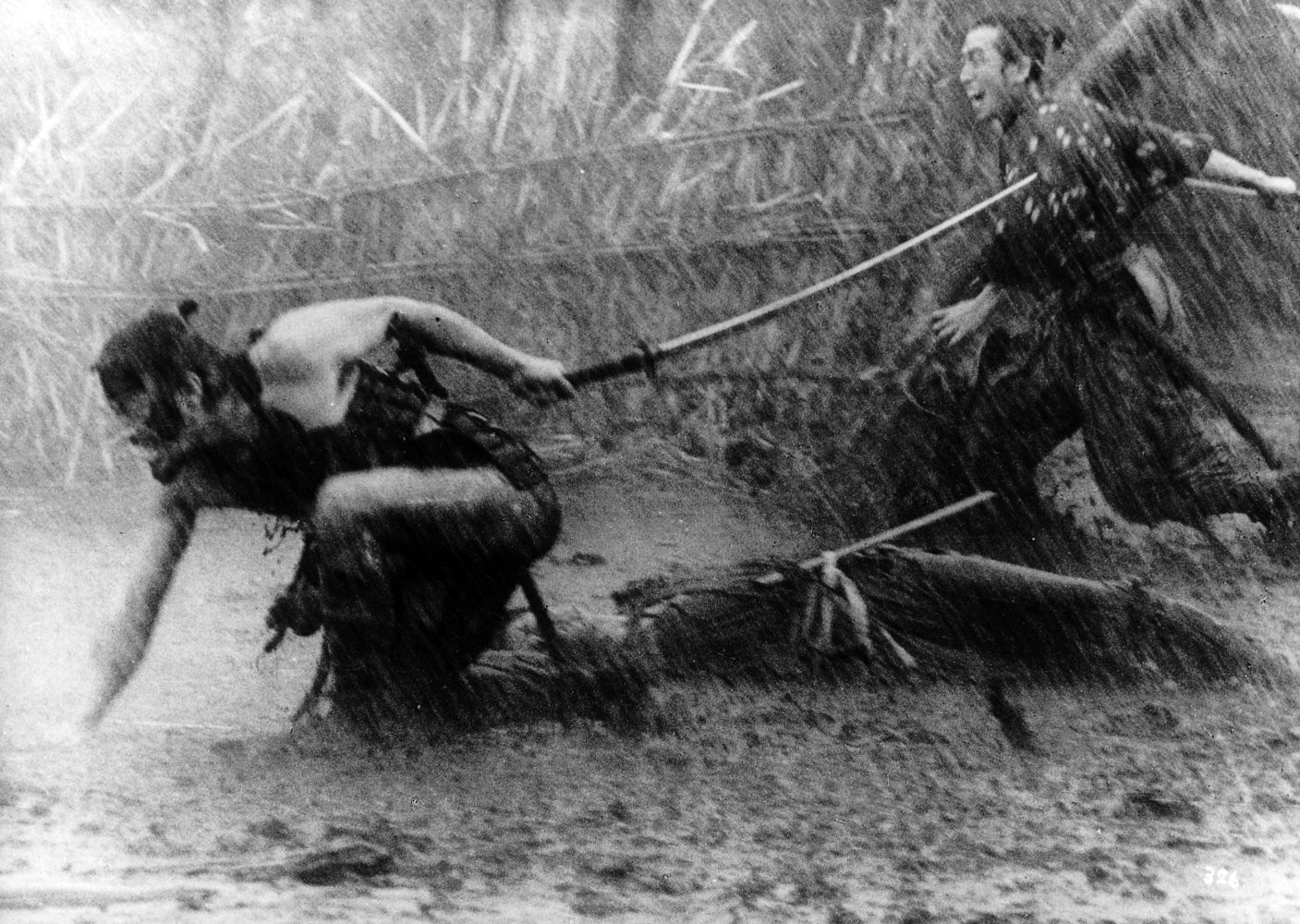
Because of Hollywood’s thoroughgoing dearth of talent and ideas, films are often remade or rebooted, historically, almost always a bad idea. Watching the trailer for the “new” Magnificent Seven, I consider this remake of a remake is in no way needed. I’d much prefer to go back and watch Kurosawa Akira’s (黒澤 明) brilliant original.
But at least this is an attempted redux within the medium (except everything about the context is different). And makes some sense from the point of view, at least theoretically, the art and science of filmmaking have advanced. However, it’s more about putting box-office bankable actors together with an ostensibly risk averse vehicle, since it already has proven successful; there’s not a lot of money to be made on the extant Seven Samurai (「七人の侍」 Shichinin no Samurai).
As to adaptations from other media, there’s some nonsense about how movies “bring X to life”, but I fully disagree. Les Misérables is alive to me in a way no film adaptation of a musical theater adaptation could ever come close to touching, and what’s more, I don’t want my version to be reduced, homogenized, and commoditized according to the way a group of Hollywood hacks decides I should think about it. The assumption being made is these showbiz folk are not only smarter than me and you, they are also smarter than Victor Hugo.
Well, I beg to differ. In reality, as William Goldman observed,¹
No one in Hollywood knows anything.
The level of complexity two hours of celluloid can deliver is inherently limited. This is what’s behind the recent increase in the exploration of TV serials, though that doesn’t solve everything. As Umberto Eco notes of the process of converting his first novel to a film:²
A book like [Name of the Rose] is a club sandwich, with turkey, salami, tomato, cheese, lettuce. And the movie is obliged to choose only the lettuce or the cheese, eliminating everything else—the theological side, the political side.
In fact, if a work is excellent in its native medium, this tends to make it a worse candidate for a good realization in another. The language it uses to conjure scenes might be what makes a work succeed as a book, whereas in a film, those scenes are typically achieved by making literal images of them—no words are involved.
I’d argue this is true for every medium—there are elements inherent in each that uniquely suit it to specific ways of conveying meaning. Effective creators understand and master those elements in order to realize excellent works. So good books, comics, games, and everything else should be allowed to just be those things—they don’t need to be boffo at the BO to matter. In fact, if you really care about a work, you should root against Hollywood co-opting something special and subcultural into an almost necessarily mediocre mass-market “success”.
Notes
- William Goldman, Adventures in the Screen Trade: A Personal View of Hollywood and Screenwriting, 1983.
- Stephen Moss, “Umberto Eco: ‘People are tired of simple things. They want to be challenged’”, The Guardian, 2011.
 Deru Kugi