Linguistic adventures in girl world (Argots, Part 2B)
When I was in the second grade, Zoom burst onto the children’s educational television scene like an excessively energetic preteen through a giant paper logo. Although my parents subscribed to the belief television rotted the mind, meaning we didn’t have one, I was able to catch Zoom from time to time, in the homes of friends or family not TV Amish. Nonetheless, there must’ve been some type of adult supervision or who’d have watched PBS instead of Batman? As the show was educational and I was in the target demo (seven–12-year-olds) they’d sometimes show it at school, and even PBS was better than classwork.
Running for six seasons, the show featured a diverse cast of rugby-shirted, precocious showbiz kids relentlessly dancing, singing, being wacky, shallowly discussing the serious topics of the day, and presenting activities for you to do yourself—games, arts & crafts, and recipes. I was to learn much later the show was inspired by Rowan and Martin’s Laugh-In, so the general zaniness, camera tricks, and running gags all were borrowed from that context. There was no script; presumably they simply loaded the “Zoomers” up with caffeinated drinks and unleashed their hijinks on the hapless viewing public.
The Fannee Doolee word game, the sung Boston zip code in the address to the show’s letters department (02134), Bernadette’s signature butterfly arm move, and Ubbi Dubbi are the main pop-culture residue of the show, with the last being a ludling already then known to me as Double Dutch. The girl culture of my school adored all these things. They pushed for activities from the show to be done in class, they flashed the Bernadette, and they spoke fluent Ubbi Dubbi.
Although my interest in languages was even then in effect, I was not entertained by this ludling. As I mentioned, I already knew it, as well as Pig Latin and a pretty unusable one called Triple Chinese. I could, but preferred not to engage in Ubbi Dubbi. Nonetheless, we come here to an interesting element of ludlings: they are typically created and used by girls.
Of course, simply by their nature as games, ludlings appeal to a younger audience. But the value of a secret language also appeals to the group as Meredith Doran explains:¹
Language is one of the cheapest tools available to kids. You don’t have money or power, but you’ve got words.
As for why these cryptolects come from the mouths of young women in particular, Jessica Weiss, a writer who tackled the topic, says:²
[G]irls are drawn to […] ludlings, because using them builds social bonds. Though girls aren’t threatened in the same way as others who use secret languages, like prostitutes or criminals, using gibberish creates a sense of exclusivity and power for girls at a time when they are otherwise inherently powerless.
Exploring a different phenomenon, the recent appearance of a paragoge, or “exclamatory syllable”, in utterances like fine-uh, stop-uh, etc., linguist John McWhorter attempts to pin down the distribution of its usage:³
[…] I have heard this primarily in, to use the technical term for the dialect, white girl.
He is partially joking, but attributes the utterance to younger women “of all shades” speaking mainstream American. He finds it not to appear in black English, among older speakers, or men. This brings these threads together, as McWhorter notes:⁴
It’s an example of the fact that when language changes it tends to be women who lead the change.
One illustrative example he presents is the change in English verbs in the third-person present from endings in -eth to -s:⁵
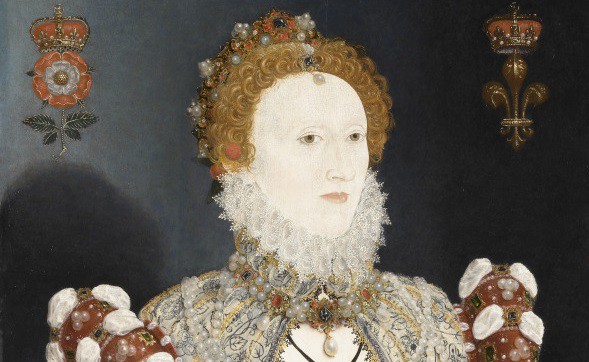
So Henry VIII, writes to Anne Boleyn, 1528, “Written with the hand of him which desireth as much to be yours as you do to have him.” […] Then Queen Elizabeth, to whom he was related quite directly, 1591, writes, “My deare brother, As ther is naught that bredes”—not breedeth — “bredes more for-thinking repentance and agrived thoughtes than good turnes to harme the giuers ayde,” […].
As bona fides at least of my acceptance of linguistic innovation, if not being a white girl, I -uh! I’ve done it for so long, in fact, I have no idea when or whence I picked it up. Though I do remember detecting a need for it as early as 1980, and making some (unsuccessful) experimental utterances, I do not flatter myself that I originated it; I’m definitely not a girl-culture influencer.
So is the fact of my gender the reason I didn’t gravitate to the pop-cultural whirling dervish of Zoom and its Ubbi Dubbi? Nope; it was something else. Certainly I was not a great conversationalist—some might call me laconic now, but I was frequently taken for a mute in my youth. Language as a game and tool for me focused instead on a branch concerned with rebuses, ciphers, and puns.
Furthermore, my objection to all the ludlings of my youth was an aesthetic one: the sounds inserted by them, /ʌb/, /eɪ/, and /ɒŋ/ (in Ubbi Dubbi, Pig Latin and Triple Chinese, respectively), are ugly to my ear, and so much more so when you hear them repeated throughout sentences or within words. Consider Ubbi Dubbi versus Matteänglisch: the latter doubles each vowel sound and infixes a /b/, a very similar process. But taking the word interesting as an example yields the pair:
- ʌbintʌberʌbestʌbing
- ibinteberebestibing
Perhaps if Zoom had brought Matteänglisch—naturally renamed something cutesy—to the American small screen in the early ’70s I’d have been more ibinteberebestebed in zoom-ah-zooming with the girls.
Read subsequent articles in the Argots series
Part 4: The Mysteries of Zūja-Go
Read previous articles in the Argots series
Part 1A: The Slang of Empyrea’s Automata
Part 1B: Canargy: a Cant How-To
Part 2A: Serious and Playful Cryptolects
Notes
- Quoted in “The Secret Linguistic Life of Girls: Why Girls Speak Gibberish”, Schwa Fire, Jessica Weiss, 2015.
- Ibid.
- John McWhorter, “No-Uh! On the rise of an exclamatory syllable in English”, Lexicon Valley, Episode 130, 2018.
- Ibid.
- Ibid.
 Deru Kugi