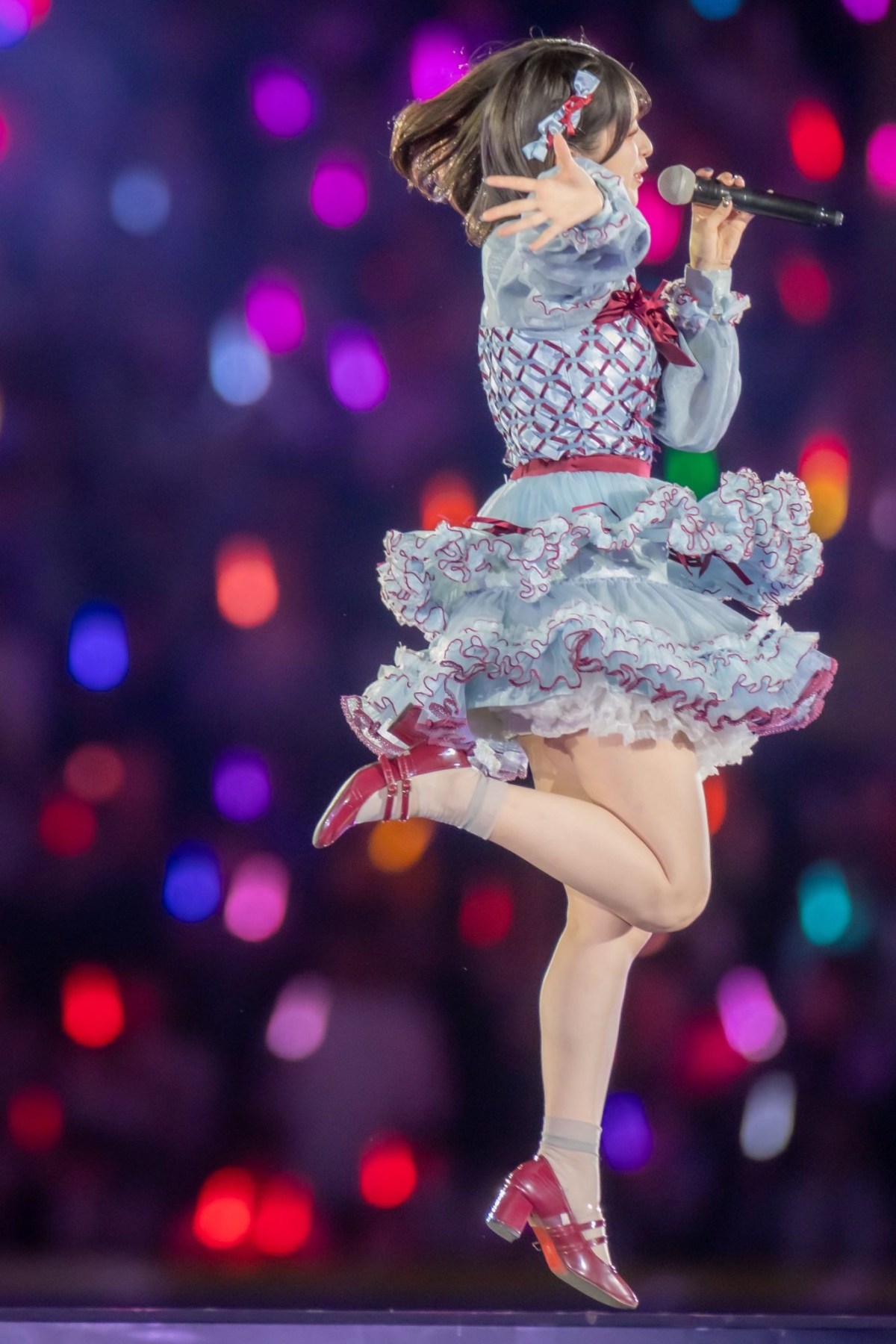
Alice as a gender instrument in Japanese culture (DeDisneyfication, Part 7A Addendum D / Taishō, Part 5 Addendum)
In the previous article, I argued the V&A’s “Alice: Curiouser and Curiouser” missed the political story behind Alice’s absorption into Japanese culture—the censorship, the freedom lectures, the nonsense that couldn’t be pinned down. But there’s a second story the exhibit missed, and ironically, they had the artifact for it right there on display.
That loli dress (ロリ, short for ロリータ, rorīta, the kanaization of Lolita). The exhibit presented it as a curiosity—a piece of Japanese pop fashion, visually striking, contextually unexplained. But that dress is not a costume. It’s the visible tip of a cultural iceberg more than a century old, one in which Alice became the central icon of a distinctly Japanese category: the shōjo.
From its earliest translations, Alice was directed toward girls. Arisu no Monogatari (『アリスの物語』, Alice’s Tale), the first translation of Alice in Wonderland (AiW), was published in newly created girl’s magazine Shōjo no Tomo (『少女の友』, Girls’ Friend), and even the translator’s pseudonym, Sumako (須磨子), is a woman’s name. Six years later, in 1918–19, the first actual female translator, Kako Yuko, produced a version of Carroll’s work which ran in a magazine aimed at adult women.¹ Translations by women became a trend, with at least six in the first decade of the postwar period and eight in the subsequent decade. In the decade spanning 2004 to 2013, there were 30 translations by women.²
This wasn’t coincidence. Alice arrived at the exact moment a new kind of reader was being created.
The word shōjo (少女) means “girl”, but in Japanese cultural discourse it means something more specific: a liminal figure, suspended between childhood and adulthood, outside the heterosexual economy of marriage and reproduction. The shōjo is not yet a woman and—crucially—does not wish to become one.
This category was produced by institutions in the late 19th and early 20th centuries. One of the many reforms of the Meiji era was the Girls’ High School Order (高等女学校令, Kōtōjogakkōrei) of 1899. The improvements thus provided in education for women worked together with the other key elements of the time—Westernization, modernization, and industrialization—to create the concept of the shōjo. In earlier times, women were children, then brides. But now there came to be an intermediate period when girls from the middle- and upper classes were at school instead.
To serve the new readership thus created, several magazines sprang up featuring the term shōjo in their titles, including Shōjo-kai (『少女界』, Girls’ World) in 1903, and in 1906, Shōjo Sekai (『少女世界』, also Girls’ World), and Shōjo no Tomo—where, uncoincidentally—where that earliest AiW translation was published. As many magazines of the time did, these presented serialized novels, but featuring female protagonists. Single-page manga began to appear within these magazines, eventually increasing in length and sophistication until they simply became shōjo manga. As a side note, this is the same audience Kobayashi Ichizo (小林 一三) was aiming for with his Takarazuka Revue (宝塚歌劇団, Takarazuka Kagekidan).
Influential critic Honda Masuko identified the defining aesthetic of this culture as hirahira (ひらひら)—the flutter of ribbons, the rustle of fabric, the blur between real and imaginary. Honda argues this quality is expressive of longing: longing for freedom within a strict patriarchy, for recognition of a culture dismissed by adults as trivial. The shōjo exists in the flutter—never fully arriving, never fully contained.³
Deborah Shamoon traces this print culture from the 1920s girls’ literary magazines through to the 1970s “revolution” in shōjo manga, when young women artists—the so-called Year 24 Group (花の24年組, Hana no Nijūyo-nen Gumi)—took over the genre and transformed it into a medium for exploring gender, identity, and desire in ways the mainstream manga industry would not have permitted.⁴
Carroll’s Alice maps onto the shōjo so precisely it feels engineered. She is perpetually transforming—growing, shrinking, never the right size. She exists in a space where adult rules are simultaneously absolute and nonsensical. She is addressed as a child by creatures who demand adult competence. She never arrives at a fixed identity; the closest she comes is her outburst to the Pigeon—“I’m NOT a serpent!”—a denial that echoes across both books as creature after creature tries to fix her as something she isn’t.⁵
In Japanese popular culture, as Japanese cultural studies scholar Masafumi Monden argues :⁶
[T]he idea of ‘Alice’ embodies the idealised image of the ‘shojo’ […] who is situated between child and adult and is largely detached from the heterosexual economy.
She is not sexy. She is not maternal. She is not obedient. She is curious, irritable, logical within an illogical frame, and absolutely unwilling to stay the size she’s been given.
This is why Alice, not Cinderella, became the icon. Cinderella resolves into marriage. Alice resolves into waking up—which is to say, not at all. And the shōjo, who exists in the space between—who is defined by the refusal to resolve into the adult feminine—recognized herself.
If shōjo is the cultural category, kawaii (可愛い, “cute”) is its aesthetic—and its weapon.
The images and manga in shōjo magazines were foundational to the kawaii aesthetic, which has not only become a well-known aspect of Japanese culture but a worldwide phenomenon. While it may seem innocent, there’s a strong current of revolt in kawaii. Sharon Kinsella, a lecturer in Japanese visual culture, traces the emergence of kawaii culture to a movement no one expected to become political: handwriting.⁷ In the 1970s, Japanese teenage girls began abandoning the traditional vertical brush-derived script in favor of a horizontal style using mechanical pencils—thin, rounded characters decorated with hearts, stars, and tiny illustrations. The style is variously called marui ji (丸い字, “round writing”), koneko ji (子猫字, “kitten writing”), and burikko ji (ぶりっ子字, “fake child-writing”). Researcher Kazuma Yamane, who studied the phenomenon, terms it “Anomalous Female Teenage Handwriting”.⁸
Schools expelled students for using it, telling you everything you need to know about how it was received.
Kinsella describes what was happening as a “delicate revolt”—a consciously passive mode of consumption and self-presentation whose subversiveness lies precisely in its refusal to look subversive. As she puts it:⁹
[Y]oung women […] desire to remain free, unmarried and young. Whilst a woman was still a shōjo outside the labour market, outside of the family she could enjoy the vacuous freedom of an outsider in society with no distinct obligations or role to play […]. [A]s young women get older and particularly in the period immediately prior to marriage, their fascination with and immersion in cute culture becomes still more acute.
And further:¹⁰
Women [criticized] as infantile and irresponsible began to fetishize and flaunt their shōjo personality still more, almost as a means of taunting and ridiculing male condemnation and making clear their stubborn refusal to stop playing, go home, and accept less from life.
By performing childishness—cute stationery, pastel fashion, rounded handwriting, infantile speech patterns—young women refused the adult roles the economy had prepared for them: wife, mother, office lady. The mainstream, trained to recognize rebellion as aggressive and explicit, couldn’t see a revolt conducted in pink.
This is the same structural logic that made Carroll’s nonsense useful as political cover in Taishō era (大正時代, Taishō jidai, 1912–26) Japan. A censor can identify a direct political statement; a girl writing in kitten script is merely a girl. Until she isn’t.
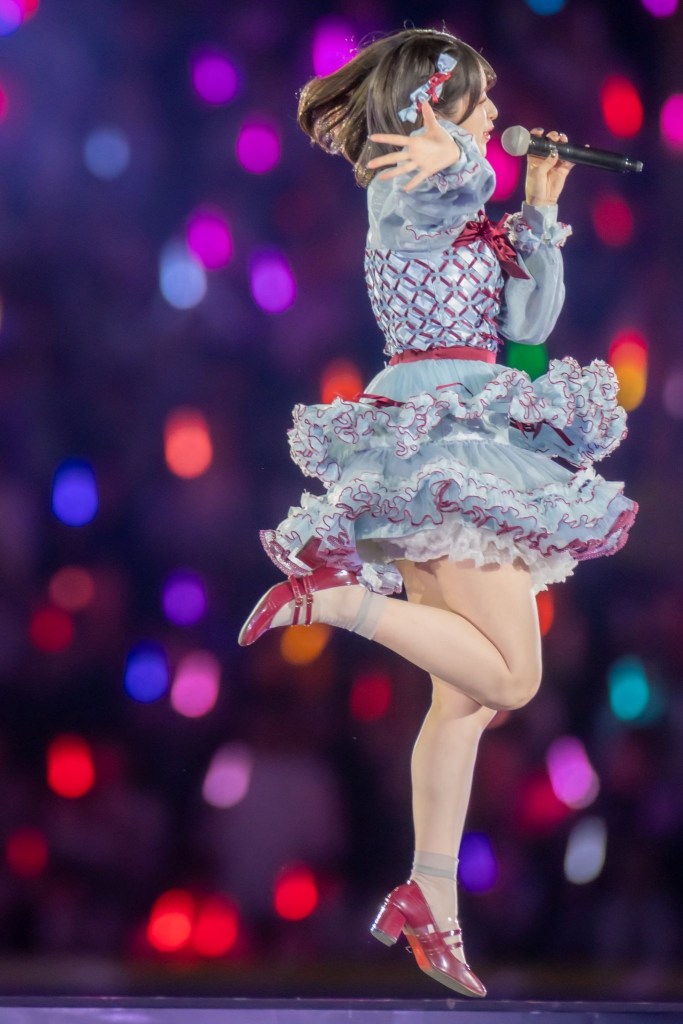
Lolita fashion—the subculture behind that V&A dress—emerged in the 1980s and 1990s as the most architecturally elaborate expression of the kawaii revolt. The style draws on Victorian and Rococo silhouettes: full skirts over petticoats, lace, ribbons, parasols, and—constantly—Alice.
The name requires addressing. “Lolita” carries, in English, the weight of Nabokov’s novel—a story of predation. Japanese practitioners of the fashion have consistently and explicitly rejected this association. The Japanese usage inverts Nabokov’s meaning: where his Lolita was defined by unwanted sexualization, the fashion is defined by its refusal of sexualization. The dress is armor, not invitation. It constructs a visual identity that is emphatically not for the male gaze—too elaborate, too impractical, too committed to its own aesthetic logic to serve as display.¹¹
As Monden notes:¹²
Arguably, in Japan, Alice has been more influential because of her fashions, which reflect her age and spirited personality, than because of her literary adventures […].
This can easily be seen in loli attire, which refers to Carroll’s works both directly, through the use of calf-length dresses and pinafores, as well as through a general aesthetic of Victorian frills and lace together with accessories like gloves and parasols. A few recent examples of this influence are Emily Temple Cute, a Japanese fashion brand, whose 2009–10 winter collection, was called “Wonderland” and SO-EN (装苑), one of the oldest fashion magazines in Japan, which ran a 22-page Alice-themed fashion spread in 2007.¹³
But the connection runs deeper than costume. Alice, like the Lolita practitioner, inhabits a world whose rules she did not write and does not accept, yet navigates with absolute self-possession. She does not revolt by fighting. She revolts by refusing to make sense on anyone else’s terms.
Alice, a cute, female protagonist on the brink of womanhood and rebelling against the arbitrary structures of the society she is meant to fit herself into was appealing and relatable when first introduced to this audience, and continues to be. Indeed, she has become more important to the culture—an icon thereof.
And this is the broad and deep context behind the items from Japan in the exhibit the V&A provided none of. There’s not AN Alice manga, rather, there’s a spectrum of them. There’s not AN Alice loli dress, rather, Alice is a major touchstone of the Japanese fashion industry. As I’ve already described, there are a plethora of books and manga translating or adapting Alice, and as we’ve also seen, the image pervades fashion in Japan.
But it’s still more far-reaching. Alice appears in television, such as 2020’s Squid Game (《오징어 게임》, Ojing-eo Geim) -esque Imawa no Kuni no Arisu (『今際の国のアリス』, Alice in Borderland). In pop music, the works remain a repeated point of reference, as in Iwasaki Yoshimi’s (岩崎 良美), “Watashi no na wa Arisu”, (「私の名はアリス」, “My name is Alice”) of 1980, Matsuda Seiko’s (松田 聖子), “Jikan no Kuni no Arisu” (「時間の国のアリス」, “Alice in Time-Land”) and Kobayashi Asami’s (小林 麻美), 「Lolita Go Home」, both in 1984, and Nakagawa Shoko’s (中川 翔子), 「Through the Looking Glass」, in 2009.¹⁷
Games have appeared regularly as well, spanning diverse genres, including, 1991’s『Alice』, 2005’s, 『Are you Alice?』, based on a manga of the same name, 2007’s Haato no Kuni no Arisu〜Wonderful Wonder World〜 (『ハートの国のアリス』, Alice in the Country of Hearts). And above and beyond the possibilities offered at Tokyo Disneyland, there are dozens of Alice-themed shops—particularly bars, restaurants, and cafes—scattered throughout Japan, often including Carroll-inspired menus and costumed servers.
Finally, Miyazaki Hayao’s (宮崎 駿) 2001 film, Spirited Away (『千と千尋の神隠し』, Sen to Chihiro no Kamikakushi) contains so many similarities to the Carroll books many point to it as an adaptation thereof. Beyond the obvious, the movie strongly incorporates several distinct Alice tropes—some specific to the local context: food causing metamorphoses, a world parallel to reality with obtuse logic, references to the Meiji period—specifically in the architecture—figures from Japanese myth and folklore, and social commentary. Not only was it a massive success in Japan, the film was well received internationally, even collecting the Oscar for Best Animated Feature in 2003.
Disney’s 1951 Alice in Wonderland arrived in Japan after Alice had been absorbed into Japanese culture for over fifty years. The film performed modestly—it was, as with its reception elsewhere, considered a minor Disney work. But its long-term cultural effect was to flatten Alice into something safe: a curious girl on a whimsical adventure, stripped of the confrontational nonsense that had made her useful.
This is the DeDisneyfication case. Disney took a figure Japanese culture had been using as a vehicle for political subversion and gender liminality and reduced her to a character design. The blue dress, the blonde hair, the headband—these became the “Alice” the global market recognizes, and they carry none of the freight that Japanese readers had been loading onto her since 1899.
But the domestication ran both ways. Japanese artists didn’t simply accept Disney’s Alice—they took the visual template and re-subverted it. The shōjo manga tradition, the kawaii aesthetic, and the Lolita subculture all appropriated Disney’s simplified Alice silhouette and refilled it with the qualities Disney had emptied out. The result is a figure who looks like Disney’s creation but functions as its opposite: not a passive dreamer, but an active refuser.
It should be clear from all this an exhibition only covering Alice in Japan could easily be assembled. While this was not the specific remit of the V&A show, it was intended to speak to the influence of Carroll’s works, so it seems a pretty significant miss.
Read subsequent articles in the DeDisneyfication series
Part 7B: Alice’s Adventures in the Cousins’ War
Part 7B Addendum: Repainting the Roses
Part 8: Guerrillas and the “Jungle”
Part 9A: Through a Magic Mirror Marred
Part 9A Addendum: The Woods “Over the Wall”
Part 9B: The Sum of its Versions
Part 9C: The “Snow White” Studio
Read previous articles in the DeDisneyfication series
Part 1: Straightening out “Hunchback”
Part 2 Addendum B: Your Western Wuxia Is Weak
Part 3A: “Hercules”: Myths and Mistakes
Part 3B: Doing Hera’s Work on “Hercules”
Part 4: Tale As Old As Agriculture
Part 4 Addendum: The Enchanted and the Postmodern
Part 5: Putting “Pocahontas” to Rest
Part 5 Addendum: Powhatan’s Mantle
Part 7A: The Wrong Rabbit Hole
Part 7A Addendum A: Curious Curation
Part 7A Addendum B: “Alice” in Revolt
Part 7A Addendum C: “Alice” as Taishō Nansensu
Read subsequent articles in the Taishō series
Part 6: Jazz: Agent of Cultural Transformation
Read previous articles in the Taishō series
Part 1: Japan’s Turbulent Taishō
Part 2B: When Tokyo Moved West
Part 4: The Mysteries of Zūja-Go
Part 5: “Alice” as Taishō Nansensu
Notes
- Amanda Kennell, “Alice in Evasion: Adapting Lewis Carroll in Japan”, 2017. The translator’s name is not given in kanji, nor is the name of the work or the publication in which it appeared cited, and I was unable to locate these details. In fact, the translator’s identity is the subject of some debate, as is their gender.
- Ibid.
- 本田 和子 (Honda Kazuko), 「「ひらひら」の系譜」, (“The Genealogy of Hirahira”), in 『異文化としての子ども』 (The Child as a Different Culture), 1982, Tomoko Aoyama & Barbara Hartley, trans., in Aoyama and Hartley, eds., Girl Reading Girl in Japan, Routledge, 2010.
- Deborah Shamoon, Passionate Friendship: The Aesthetics of Girls, Culture in Japan, University of Hawai’i Press, 2012.
- Lewis Carroll, Alice’s Adventures in Wonderland, 1865.
- Masafumi Monden, “Being Alice in Japan: performing a cute, ‘girlish’ revolt”, Japan Forum, 2014.
- Sharon Kinsella, “Cuties in Japan”, Women, Media and Consumption in Japan, Lise Skov & Brian Moeran, eds.,1995.
- Kazuma Yamane, cited in ibid.
- Ibid.
- Ibid.
- Masafumi Monden, Japanese Fashion Cultures: Dress and Adornment in Contemporary Japan, 2015.
- Monden, 2014.
- Ibid.

