Sator Square Non-Starters

Failed solutions to an ancient rebus (Sator Square, Part 1)

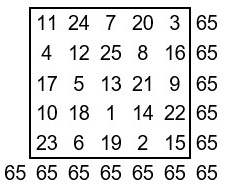
The so-called Sator Square, a palindromic grid of letters which can be read beginning at any of the four corners, has captured people’s imaginations for millennia. Early in its history, those who ostensibly understood it inscribed it widely, and it eventually came to have a cultural value similar to that of the Icelandic Rune Staves I have also written about. More recently, lacking a key to its understanding, scholars and lay folk have theorized about its meaning. So, in something of a turnabout from my posts about the Witham Sword, I want to evaluate some of the different solutions to this mysterious square.

The text reads:

R O T A S
O P E R A
T E N E T
A R E P O
S A T O R

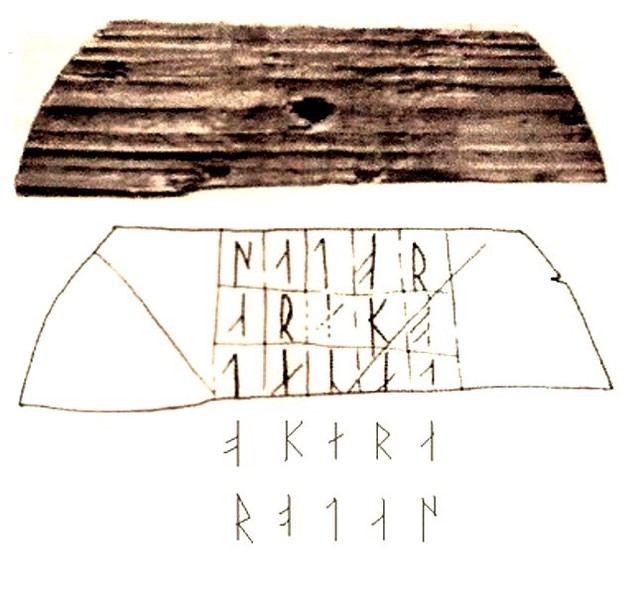
This appears to be some type of Latin phrase, and has puzzled many since it first started appearing. And appear it did, reaching a status some have described as memelike long before the intertubes began trading in such stuff. Its earliest appearances seem to have been on the Italian Peninsula, but it has been seen in France, Portugal, and as far away as England and Syria. There is even a runic inscription of the square Although somehow this has been characterized and spread across the internet as being a runestone, it is (as can be seen in the image, below) carved into wood—the bottom of a bowl of some kind, partly missing, but which doubtless finished the Square.

Then, as I noted, the secret of the square seems to have been lost. The earliest known attempt at a decipherment of the Square came from a Byzantine scribe in the 14th century, but there have been many since. The 19th century saw a boom in scholarly efforts, which continued until last century when they dropped off, with codebreakers either feeling it to be unsolvable or being satisfied with the efforts already made.

On the unsolvable front, Rose Mary Sheldon has provided us with an exhaustive 34-page bibliography of the solutions posited.¹ Let’s turn to just a few of the solutions she considers to have failed. First there’s the one of that first Byzantine scribe, who broke it down thus:

σάτορ—ὁσπεἱρων [sower]
άρέπο—ἄροτρον [plow]
τένετ—ϰραεί [holds]
ὄπερα—ἔργα [works]
ρότας—τροχούς [wheels]

There are problems, of course. Mainly these are around arepo, which would continue to bedevil would-be codebreakers as we shall see. The scribe here claims is ἄροτρον (L. arepum, of which arepo would be an inflected form) supposedly meaning “plow”, although it is found in no other source. Some have suggested a borrowing from a Gaulish or Celtic term, *arepos, which again is nullibiquitous. The asterisk in *arepos is used by linguists to mark a reconstructed word—that is, one unattested but conjectured to exist. Wanting arepo to mean plow or opera rotas to somehow imply it seems a clear case of confirmation bias: “it says ‘sower’ so it must say ‘plow’.” I think given the brevity of the rebus, the inclusion of such redundancies would actually be quite undesirable. Still, it lives on in many modern interpretations which hold the phrase’s full translation, with the other words translating in order as “the sower”, “to hold”, “works”, and “wheel”, is therefore:

The sower holds the plow, the works, the wheels.

Others have decided arepo is a proper name, again choosing to set aside the fact it’s a hapax legomenon, and so render the phrase:

The sower Arepo holds the works, the wheels.

They somehow feel “the works, the wheels” implies a plow, even though the plows of the appropriate time in no way resembled such a description. Frustration with the word led some to dismiss it as a term like abracadabra—without meaning, but while some such terms are attested, it’s a far from satisfying conclusion. Abracadabra, rather, seems to derive from ΑΒΛΑΝΑΘΑΝΑΛΒΑ (ablanathanalba), a palindromic term associated with the rooster-headed anguipede, ΑΒΡΑΣΑΞ (Abrasax). Ad repo, “I creep towards” is another interpretation suggested but results in still worse nonsense. Yet another suggestion is the Latinized and shortened name of the popular god of good luck from Graeco-Roman Egypt, Harpocrates (Har-pa-khered, “Horus the Child”).

To get from Harpocrates to Arepo, elide the initial ⟨h⟩ (the Greek is Ἁρποκράτης), inject a vowel ⟨e⟩ to break up the consonant cluster ⟨rp⟩, drop the entire second half, and Robert is your father’s brother. The meaning (in a charitable reading) thus becomes a decently apotropaic formula:

The sower Harpocrates keeps in check toils and tortures.

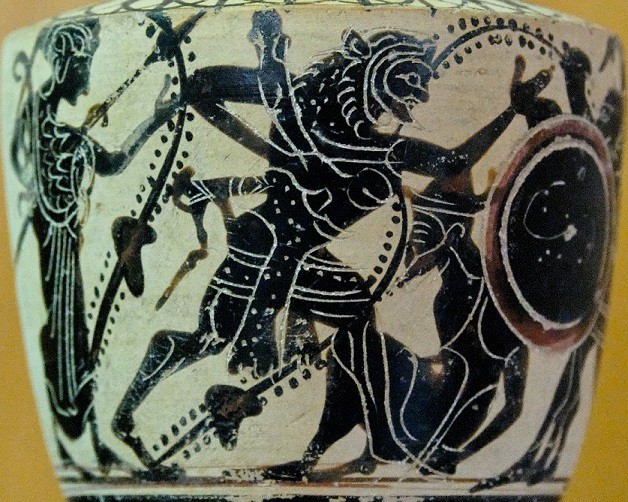
Never mind the god is nowhere depicted as a “sower”, appearing in Egyptian stelae perched on a crocodile’s back, snakes clutched in his outstretched hands—an image calling to mind Herakles…. And later, and especially in the Graeco-Roman context as a child with a finger pressed to his lips. Varro was apparently the first to describe the gesture thus:²

[…] Harpocrates digito significat, ut taceam.

[…] Harpocrates with his finger makes a sign to me to be quiet.

However, it is important to note this pose actually relates to the form of the hieroglyph for “child”, and did not have a meaning relating to silence or secrecy in its original context. This sometimes-winged figure was later conflated with Cupid—Cupid with a uraeus on his head, though later forms morphed it into a topknot. If anything, he is shown holding a cornucopia—the polar opposite of the idea of sowing.

The next major direction of exploration came from the idea the inscription should be read boustrophedonically. The term means “as (plowing) oxen-turn”, therefore referring to a reading alternating directions, so:

SATOR
OPERA
TENET
(TENET)
OPERA
SATOR

The image of plowing oxen probably was a temptation to employ this type of reading, but it’s just more fruit of the poison arepo tree. And again, applying a generous amount of imagination to the reading, we can interpret this as the New Testament dictum:³

[W]hatever a man sows, that he will also reap.

This solution also has its share of issues: first, inscriptions in boustrophedon appeared only in the prehellenic Greek (until 510 BCE) and archaic Etruscan (until 480 BCE) periods, coinciding with the advent of the Phoenician-based alphabet into those cultures, before they had settled on a single reading direction; left-right for Greek and right-left for Etruscan. So these predate the first known appearance of the square by just about 500 years.

Second, in boustrophedon inscriptions, the letters themselves are typically reversed to show the reading direction. Such inscriptions also invariably begin left to right, while this solution requires a right-to-left start. That is, this solution would require the versions beginning with sator to be the older, original form, which contradicts all evidence. Indeed, the desire to read the cryptogram boustrophedonically may have actually prompted the current dominance of the sator-first form.

Finally, the symmetry of the square is a major element of its magic, or at any rate, aesthetics. The 5×5=25 form is destroyed by the 30-letter reading required for the boustrophedon to work. Furthermore, the words arepo and rotas are omitted entirely in this solution, which seems like taking the easy way out.

As you may have also noticed, we have now entered a realm where interpretations are based on the idea the inscription is a Christian one. And the locations it has been found in suggest such an association, as they include Benedictine and Cistercian abbeys, a cathedral, an Anglican church, and a private chapel.

And many other seeming links to Christian tradition have been noted in potential solutions: An old Cappadocian tradition gave the shepherds of the Nativity the names Sator, Arepon, and Teneton. An old Byzantine biblical tradition names the Three Magi as Ator, Sator, and Peratoras. And the Ethiopians and Abyssinians invoke the Savior by enumerating the five nails of the Cross: Sador, Alador, Danet, Adera, and Rodas.

Attempts were also made to read the opening lines of the square as a set of abbreviations, similar to those I used in my solution for the Witham Sword:

SAlvaTOR A REx Pontifex O

and

SATOR A Rerum Extremarum Principio Omni

Of the two, the first is execrable and the second only somewhat less so, but again, nowhere apart from this posited solution to the Square are these words found together—a fairly clear sign there was no such phrase to code into a rebus.

One solution seeming to satisfy many interprets the Square as an anagram of Pater Noster, the opening words of the Lord’s Prayer, with a leftover pair of ⟨A⟩s and ⟨O⟩s as Alpha and Omega, representing God’s omnipresence.

Some aver this could not possibly be a coincidence and this must be the solution. However, when it comes to anagrams, quite a few attractive ones are possible—and some even manage to use all the letters—including:

  • Oro te, oro te, pater, sanas.
  • O pater, ores pro aetate nostra.
  • Ora, operare, ostenta te pastor.
  • Retro, Satana, toto opere asper.
  • Satan, oro te pro arte, a te spero.
  • Satan, ter oro te, opera praesto.

However, all of these Christian associations are easily swept aside by the fact the earliest known versions of the Square are graffiti from Pompeii. Two such were found in the city in separate locations written in different hands and were buried in the ash of the exploding Vesuvius, giving a clear and irrefutable terminus ante quem of 79 CE. Not only was there no known Christian population in the city by that time, 1. It is not known how long before 79 CE the inscriptions were made—one of them has at least one responding graffito, so it had to have stood there for at least a while, and 2. If this were a Christian cryptogram it would likely have had to have been formulated and dispersed from other areas with larger communities and there is zero evidence for this.

On top of this, the language of the early New Testament was either Aramaic or Greek—some debate remains as to whether Greek was originally used or if there was an Aramaic urtext—with the earliest possible date for the Gospels in any form being around 40 AD. That accomplished, a Latin translation would have to have been undertaken—for which, I might add, there is also no evidence until the Vetus Latina, a hodgepodge of translated sections from the 2nd century at the earliest. Then a cryptogram relating to such a text would need to be created and disseminated even to places with a negligible Christian community, all within a maximum of 39 years. The whole hypothesis is pretty sketchy—even accepting the several unproven bits, the timeline just doesn’t work.

Finally, the phrase:⁴

ἐγώ εἰμί τὸ Ἄλφα καὶ τὸ Ὦ

I am the Alpha and the Omega

Has as its source, the Book of Revelation written by the Apostle John. Although this was to become one of the titles of Christ and God, traditional sources and historians agree its first use dates to the reign of the Roman emperor Domitian (81–96), and so could not possibly have been used in Pompeii.

In fact, the discovery of the first of the Pompeiian Squares in 1936 was most likely the cause of the decline of scholarship on the issue more specifically than the cases I mentioned earlier—nearly everything had to be simply thrown away. The second, while actually found in 1925, was in much worse shape, coming from a ruined house, and was only able to be identified via the model of the other graffito. In Part 2, I’ll get to a theory I do credit, and why.


Read subsequent articles from the Sator Square series

Part 1 Addendum A: Blessings Through Sator

Part 1 Addendum B: Acrostic as Microcosm

Part 2: And the Rotas Go ’Round

Part 2 Addendum: Loosening “Tenet”’s Hold


Notes

  1. Rose Mary Sheldon, “The Sator Rebus: An Unsolved Cryptogram”, Cryptologia, July 2003.
  2. Marcus Terentius Varro, De lingua latina libri XXV (On the Latin Language in 25 Books), 5.10, ca. 47–44 BCE.
  3. Gal. 6.7, King James Bible (KJV), 1611, though the original dates to ca. 40–60.
  4. Rev. 1:8, 81–96.

Trouble with “Tarzan”

Lord of the Jungle: exemplar for Edgar Rice Burroughs’ political views (DeDisneyfication, Part 6)

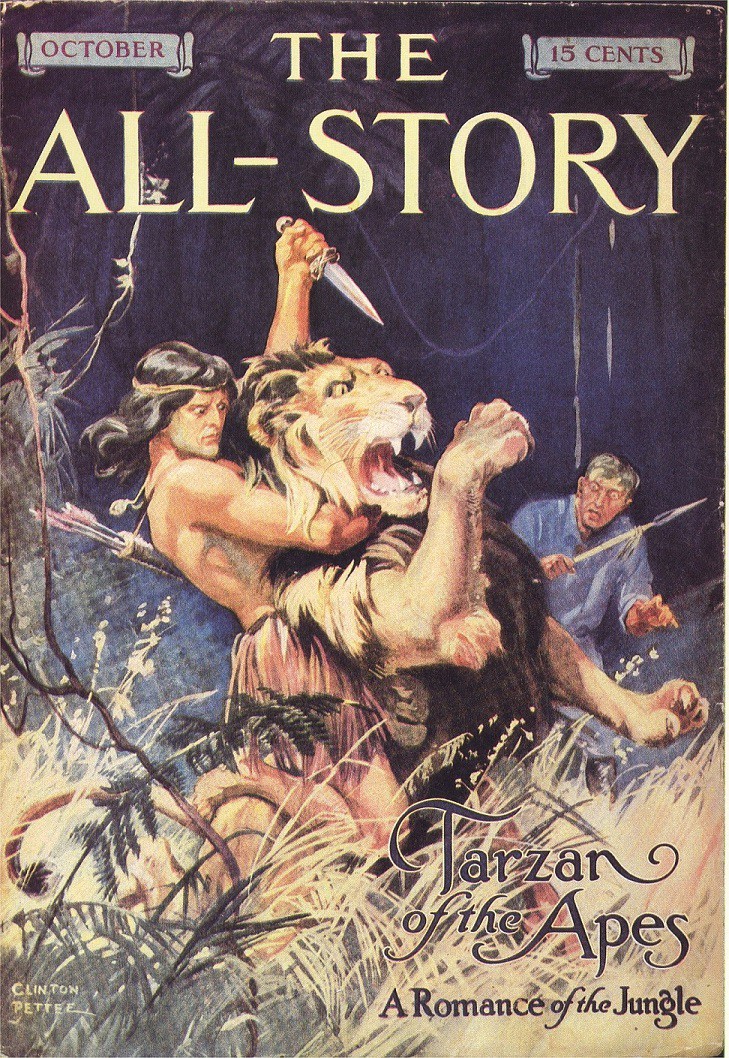
Although at first blush it might seem like an innocent-though-improbable adventure yarn, Tarzan is a troubling tale on many levels: its author, Edgar Rice Burroughs clearly believed in social Darwinism, class hierarchy, patriarchy, eugenics, the supremacy of the white race, and indeed his own superiority, claiming a “pure” Anglo-Saxon lineage. The name Tarzan itself is concocted to mean “white skin” in the language of the apes.

It is fair to call him a man of his times, since these ideas were widespread in the US in the teens and ’20s, when mainstream journals would describe anyone from anywhere south of Paris as “swarthy”, but I’m not quite ready to fall over myself forgiving him. There’s also the oft-raised question of whether we can or should hate the artist but love the art.

However, it would also be fairly difficult to disentangle Burroughs’ worldview from his works. Even though he dissembled, saying,¹

Entertainment is fiction’s purpose, [not] disseminating any great truths or spreading any propaganda […].¹

Such things are still frequently incorporated into his works, sometimes allegorically, but sometimes quite overtly as well. The first of the Tarzan books, Tarzan of the Apes, was published in 1912, to enthusiastic reception in America as well as Europe. But after the outbreak of WWI, Burroughs used subsequent books as a platform to attack and insult the German people, even though it lost him their readership. During the Red Scare, stories like The Moon Maid were used to condemn socialism as well.

And indeed, the author did not stick to fiction when talking about his views. He opined on the Hickman murder trial the perpetrator was a “moral imbecile” and,²

If we hang him we have removed […] a potential menace to peace and happiness and safety of countless future generations, for moral imbeciles breed moral imbeciles, criminals breed criminals, murderers breed murderers just as St. Bernards breed St. Bernards.

He continued:³

[A] new species of man has been evolving through the ages and only when society awakens […] will it realize that the members of this new species may not be judged by the same standards that hold for us […]. Destruction and sterilization are our only defense and we should invoke them while we are yet numerically in the ascendancy.

In his unpublished article, “I See a New Race”, Burroughs imagined a future civilization that had adopted strict policies of intelligence testing and forced sterilization:⁴

The sterilization of criminals, defectives and incompetents together with wide dissemination of birth control information and public instruction on eugenics resulted in a rapid rise in the standards of national intelligence after two generations […] prizes went to families that produced the most intelligent children. Stupidity became unfashionable.

Returning to his fiction, the Tarzan stories don’t just contain vague allusions to these ideas, they are a philosophical embodiment of them. The entire premise of the works is that a noble white man will come to master his environment regardless of how many obstacles he must overcome to do so. Remember, Tarzan’s birth name is John Clayton, Viscount Greystoke. Burroughs’ premise is millions of years of evolution have made Tarzan not only superior to the creatures of the jungle but also to humans of other races and of lower social classes, including women.

Peppered throughout are his tales are descriptions of “surly” and “rapacious” Arabs, and “superstitious” black people, though some of the stronger terms used in earlier editions have been subsequently edited out; Burroughs would unhesitatingly use the N-word, as well as charming terms like “smoke”. Indeed, Tarzan seems to enjoy killing black men, detecting some relatedness to himself, but not believing them to be fully human. He posts a sign on his home to announce himself upon the arrival of Caucasians, reading:⁵

This is the House of Tarzan, The Killer of Beasts and Many Black Men.

Because of this propensity, professor of American history Gail Bederman refers to him as “lyncher Tarzan”.⁶

Burroughs sees modern civilization, and particularly the racially mixed communities found therein as decadent, for which he sees social Darwinism, which he believes is “nature’s law”, as the cure. In Tarzan and the Lost Empire, Burroughs’ glorification of eugenics again surfaces, in the form of an empire called Honus Hasta, whose rulers, in order to counter the rampant criminality that long ago plagued the place,⁷

[…] made laws so drastic that no thief or murderer lived to propagate his kind. Indeed, the laws of Honus Hasta destroyed not only the criminal but all members of his family, so that there were none to transmit to posterity the criminal inclinations of a depraved sire […] the laws of Honus Hasta prevented the breeding of criminals.

Burroughs dabbled in creating such a community himself when he subdivided his Tarzana Ranch to create a new suburb of Los Angeles:⁸

True to the namesake who personifies “White-Skin,” Tarzana evolved along the lines of other 20th-century suburbs, as a place designed to ensure that Anglo-American civilization could thrive in isolation and where ordinary white people could become extraordinary Anglo-Saxons.

Disney, whether blithely unaware of this background, or choosing to ignore it, decided to make a movie about this character. And again they are far from alone, in addition to the 24 novels Burroughs originally penned, there were another dozen unauthorized ones, radio and stage productions, eight silent films, over 40 classic serial films, a pile of TV shows, nine more recent films, and several documentaries, including 1997’s Investigating Tarzan, which explored the durability of the character’s mystique despite the racism inherent in it and Burroughs’ other works.

I’d be the last to say art should shy away from controversy, but Disney’s approach is not an embrace, it’s just a fresh coat of whitewash. There is an implicit societal idea the studio takes on board works created for children such as their films should contain ethical meaning and lessons but over and over they talk down to their audience and sanitize and trivialize the problems and conflicts encountered.

I’ll present a longtime hero of mine for contrast: Maurice Sendak. In answer to the question, “what is appropriate to tell children?” he said simply:⁹

Tell them anything you want.

That is, he did not think children needed to be condescended to, and no topic was off limits. His books, Where the Wild Things Are, Mickey in the Night Kitchen, and Outside Over There, make up a sort of trilogy. All of them were controversial, with Mickey drawing fire in particular for showing the titular character nude. He says they are:¹⁰

[…] all variations on the same theme: how children master various feelings—danger, boredom, fear, frustration, jealousy—and manage to come to grips with the realities of their lives.

Some pretty real topics there, and if you’ve read any of those books, you know he leans in.

Disney sidesteps some of the Tarzan issues by painting an Africa where only he and various animals live until more Europeans arrive—effectively whitewashing black people out of existence. Nonetheless, the most laughable part of Burroughs’ tales, Tarzan teaching himself to read, write and speak English from the books he finds in his dead parents’ home, remains in the film. From a linguistic standpoint, calling this impossible would be an understatement. The animation studio does manage to also add some positive messages about family bonds, human guardianship of nature, and, of course, the evil and greedy villains are defeated in the end.

However, while Disney clearly can’t be accused of subscribing to Burroughs’ worldview, as we have already seen, particularly in Pocahontas and The Hunchback of Notre Dame, they do present a corporate Barthesian myth: the best way to deal with problematic differences between people is to simply pretend they don’t exist. And while this is certainly a step up from advocating the eradication of the other, “just look away” is a pretty poor lesson too.


Read subsequent articles in the DeDisneyfication series

Part 7A: The Wrong Rabbit Hole

Part 7A Addendum A: Curious Curation

Part 7A Addendum B: “Alice” in Revolt

Part 7A Addendum C: How “Alice” Grew Big in Japan

Part 7B: Alice’s Adventures in the Cousins War

Part 8: Guerrillas and the “Jungle”

Part 9A: Through a Magic Mirror Marred

Part 9A Addendum: The Woods “Over the Wall”

Part 9B: The Sum of its Versions

Part 9C: The “Snow White” Studio

Part 9D: Snowhaus

Part 10: The Little Less-Than

Part 11: Batmouse 3D

Part 12: Mork & Scheherazade


Read previous articles in the DeDisneyfication series

Part 1: Straightening out “Hunchback”

Part 2: Making over “Mulan”

Part 2 Addendum B: Your Western Wuxia Is Weak

Part 3A: “Hercules”: Myths and Mistakes

Part 3B: Doing Hera’s Work

Part 4: “Belle” Epoch

Part 4 Addendum: The Enchanted and the Postmodern

Part 5: Putting “Pocahontas” to Rest

Part 5 Addendum: Powhatan’s Mantle


Notes

  1. Edgar Rice Burroughs, “Entertainment Is Fiction’s Purpose”, Writers Digest,
    June 1930.
  2. Burroughs, “‘He’s Moral Imbecile,’ Famous Writer Says”, Los Angeles Examiner, January 1928.
  3. Burroughs, “Burroughs Calls Him ‘Instinctive Criminal’”, Los Angeles Examiner, January 1928.
  4. Burroughs, “I See a New Race”, ca. 1935, unpublished, quoted in John Taliaferro, Tarzan Forever: the life of Edgar Rice Burroughs, Creator of Tarzan, 1999.
  5. Burroughs, Tarzan of the Apes, 1912.
  6. Gail Bederman, Manliness and Civilization: A Cultural History of Gender and Race in the United States, 1880–1917, 1995.
  7. Burroughs, Tarzan and the Lost Empire, 1928–1929.
  8. Catherine Jurca, “Tarzan, Lord of the Suburbs”, Modern Language Quarterly, 1996.
  9. Selma G. Lane, The Art of Maurice Sendak, 1998.
  10. Ibid.

Putting “Pocahontas” to Rest

The historical realities behind a persistent national myth (DeDisneyfication, Part 5)

Disney’s Pocahontas is in many ways an easy target for criticism: both those who see it as overly politically correct and those who see it as a continuation of the mythmaking of a culturally dominant group find fault. Still, it seems a good film to tackle at this juncture, as these polar points of view also strongly color our current national political discourse.

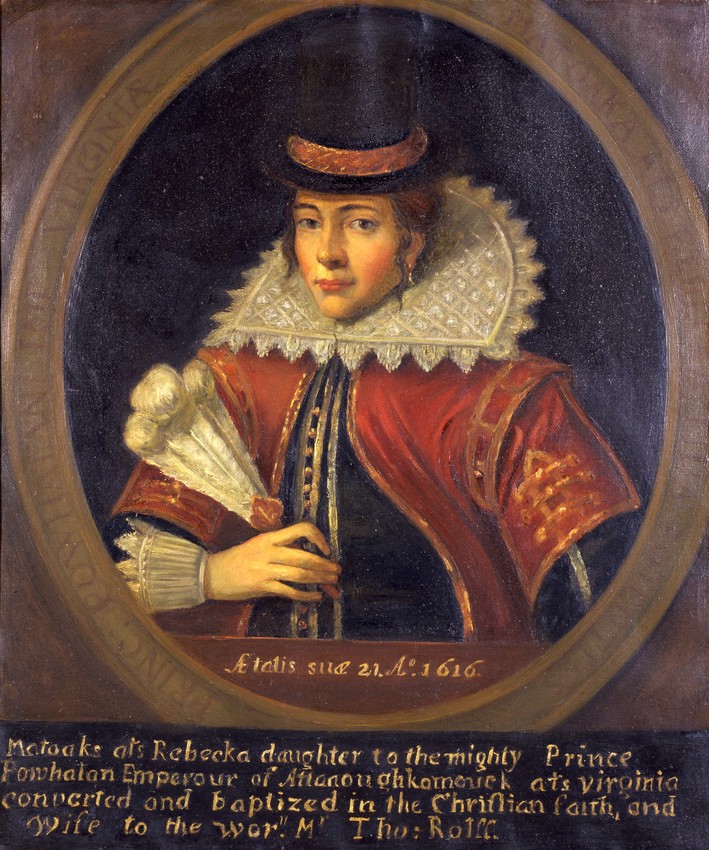
In the interest of full disclosure, I won’t leave this information to the end: I have already revealed my white-trash-royalty heritage, so of course I am related to Pocahontas. Not by blood—John Rolfe’s brother, Henry, is in my direct ancestral line, so Matoaka (as she is more properly called) would be a many-times-great grand aunt by marriage. It was common practice for the Powhatan peoples to have many names, and to use them based on context. Matoaka was her birth name, meaning “Bright Stream Between the Hills”, and which they did not use among the English. Pocahontas was apparently a childhood nickname meaning “Playful One”.

So, let’s get right to it: the story is nearly entirely nonsense, made up of tales concocted by Smith to enhance his personal reputation, and then romanticized by a dozen hacks selling visions of “noble savages” and “manifest destiny”.

Disney’s Pocahontas originated with a director vaguely pondering ideas and running across an image of Princess Tigerlily from Peter Pan. This image is about as culturally sensitive as anything from the ’50s—perhaps a minor step up from the Cleveland Indians’ logo. Indeed, as far as Barthesian myths go, the Pocahontas story is already a whopper larger than any Disney could concoct: an important element of the lore clothing the Wille zur Macht realities of our national origin story.

That Disney tries to smooth out the edges of this story draws flak as political correctness, but the fact they touch it at all is something anyone who cares about historicity will decry. But I’ll note Disney is far from alone in the repeated retreading of this malarkey—again, as with most of their efforts, they chose a subject often retold. But attempts to restore the facts long predate this version, so the animation studio had to deliberately reach back for a version less rooted in history.

The central problem seems to be—once again—that Disney’s goal, repeating the success of their romantic epic, Beauty and the Beast, did not couple well with their subject, a repeatedly embellished tall tale about the origin of the United States. As usual, their choice of methods to solve this round-peg-square-hole problem is to get a large hammer and beat the entire works into jelly.

The historical facts are hard to find, but I’ll relate what I can. Even Smith never said he had anything but a friendly relationship with Matoaka. She was around 10 years old at the time, and even by 17th-century standards, that would have been wildly inappropriate. Smith told nearly the same story he did about Matoaka concerning his execution being prevented among the Hungarian Turks; it was apparently a favorite of his, with details cribbed from popular contemporary moral tales of faithful Christians prevailing through harrowing events: the maiden interposing her own body between Smith and his would-be executioner. He related the Turkish version in his book, True Travels

Next, the English kidnapped and held Matoaka for three years, used her to ransom prisoners back from Powhatan, but still didn’t release her when this had been accomplished. In a very real Stockholm-Syndrome scenario, she refused to return to her people when, at last given the chance, was baptized Rebecca, and subsequently married John Rolfe. Their union finally cooled the tensions between the natives and the colonists, at least for a while.

Rolfe, in his letter to the Virginia Governor asking to marry Matoaka, says of her:²

[Her] education hath bin rude, her manners barbarous, her generation accursed, and so discrepant in all nurtriture frome my selfe […].

Still, he is willing to take up this burden

[F]or the good of this plantation, for the honour of our countrie, for the glory of God, for my own salvation, and for the converting to the true knowledge of God and Jesus Christ, an unbeleeving creature, namely Pokahuntas.

Although perhaps these are just his rationalizations as he also says she is the one…⁴

To whom my hartie and best thoughts are, and have a long time bin so intagled, and inthralled […].

It seems he’s having a Huck Finn moment, so that’s at least progress.

Three years into their marriage, Rolfe returned to England with Matoaka to drum up investment for the colonial venture and presented her to James I as a princess, which she really was not. Despite Rolfe’s and Disney’s desires to call her such, Powhatan apparently had a vast number of children, and she in no way figured into any sort of succession. They were just about to head back to Virginia when she sickened and died—as did many Native Americans coming into contact with Europeans, likely from some disease she had no natural resistance against. She was 21 years old.

Powhatan also died soon after, and peace with the English came to an end. Nonetheless, Matoaka and her father are inextricably woven into the story of the US through their many notable descendants, including two First Ladies and several members of the First Families of Virginia.

I’ve held off on specific criticisms of Disney’s film mainly because it would be a quagmire boggier than the Lernaean swamp. And it’s honestly so empty-headed it’s not even worth nitpicking: several of those involved in its making removed—or wished they could remove—their names from the production, for example, Co-Director Eric Goldberg worked under the pseudonym Claude Raynes. Most notable among these is Shirley “Little Dove” Custalow-McGowan, a Powhatan native brought in as a cultural consultant, but who became disenchanted with the work when it became clear there would be little done to attempt historical accuracy.

Let’s just say the film brings nearly no light to this subject, and despite the cries of political correctness, falls back repeatedly on racial stereotypes, even with its comic-relief animals, Percy and Meeko. A bright spot, if it can be so called, is because of how fraught it is, we are likely to be spared a live-action redux.

Lydia Howard Sigourney wrote a poem now seldom recalled, but which was adapted into 1910’s silent film version of the tale. I’d characterize Sigourney’s overall tone as imperialist nostalgia, but she has some genuine feeling for her titular heroine, and though florid—the style at the time—in the end it’s a more fitting tribute:⁵

The council-fires are quench’d, that erst so red
Their midnight volume mid the groves entwined;
King, stately chief, and warrior-host are dead,
Nor remnant nor memorial left behind:
But thou, O forest-princess, true of heart,
When o’er our fathers waved destruction’s dart,
Shalt in their children’s loving hearts be shrined;
Pure, lonely star, o’er dark oblivion’s wave,
It is not meet thy name should moulder in the grave.


Read subsequent articles in the DeDisneyfication series

Part 5 Addendum: Powhatans Mantle

Part 6: Trouble with “Tarzan”

Part 7A: The Wrong Rabbit Hole

Part 7A Addendum A: Curious Curation

Part 7A Addendum B: “Alice” in Revolt

Part 7A Addendum C: How “Alice” Grew Big in Japan

Part 7B: Alice’s Adventures in the Cousins War

Part 8: Guerrillas and the “Jungle”

Part 9A: Through a Magic Mirror Marred

Part 9A Addendum: The Woods “Over the Wall”

Part 9B: The Sum of its Versions

Part 9C: The “Snow White” Studio

Part 9D: Snowhaus

Part 10: The Little Less-Than

Part 11: Batmouse 3D

Part 12: Mork & Scheherazade


Read previous articles in the DeDisneyfication series

Part 1: Straightening out “Hunchback”

Part 2: Making over “Mulan”

Part 2 Addendum B: Your Western Wuxia Is Weak

Part 3A: “Hercules”: Myths and Mistakes

Part 3B: Doing Hera’s Work

Part 4: “Belle” Epoch

Part 4 Addendum: The Enchanted and the Postmodern


Notes

  1. John Smith, The True Travels, Adventures, and Observations of Captain John Smith into Europe, Asia, Africa, and America From Ann. Dom. 1593 to 1629, 1630.
  2. Quoted in Lyon Gardiner Tyler, ed., Narratives of Early Virginia, 1606–1625, 1907.
  3. Ibid.
  4. Ibid.
  5. Lydia Howard Sigourney, “Pocahontas”, Pocahontas, and Other Poems, 1841.

“Belle” Epoch

The Neolithic origins of “Beauty and the Beast” (DeDisneyfication, Part 4)

Beauty and the Beast marked a transition for Disney’s animation studio: the film featured a modern female protagonist, one who, rather than attending to household chores, prefers to educate herself through reading. By and large, these things are quite positive and a welcome change from the frankly ditzy Little Mermaid.

The key message of the film is about people’s appearances versus their true natures—bracketed by Gaston (Richard White), a good-looking creep, and the Beast (Robby Benson), whose appearance is beastly, but who is actually good—which also feels spot on. The comic relief is good, the songs are good, its early integration of 3D CG is done well. Indeed, Beauty and the Beast was to become the mold for the studio’s films for the next decade with greater and lesser degrees of success. Arguably, we are still in this era.

Admittedly, there are some niggles I feel worth mentioning: Belle’s (Paige O’Hara) thirst for reading apparently extends only to fairy tales—the song she sings about her favorite book says it contains Prince Charming, and this is the only example we are given of her reading matter. While she seems to be of marriageable age—whatever that might be in medieval(?) France—she also wears her hair in pigtails, so it’s hard to figure out just how old she’s supposed to be.

Also, while it’s great she’s not a domestic drudge, she also has no real responsibilities at all—she reads and hopes for adventure and does not have a great deal of agency. Her father (Rex Everhart) is an unsuccessful tinkerer: his gadgets’ lack of success is part of the case made for throwing him in an asylum, so it’s difficult to understand her independence.

When it comes to the relationship between the two titular characters, some have characterized it as Stockholm Syndrome, but I think Disney managed to successfully navigate those waters: Belle volunteers to stay in the Beast’s castle as a substitute for her father, the Beast generally treats her well, and even lets her go when confronted with the fact she is effectively his prisoner. Overall, it’s actually a pretty great film, so I’ll mainly be discussing its origins.

And on this topic, the tale is very nearly as old as time: in folkloric categorization, Beauty and the Beast is known as ATU-425C. The first three letters merely mark the classification within the Aarne-Thompson-Uther system, the last one marks a variant type, and the number, one which applies to a large body of tales, refers to its actual motif, known as The Lost Husband. A well-known example, and perhaps my favorite, is “East of the Sun and West of the Moon”¹ ATU-425A; the main form of the tale. Kay Nielsen’s illustrations probably have a lot to do with this. Later in life, he worked for Walt and contributed to some of the more outstanding scenes of Fantasia. In any case, some estimates place the prototype of this tale in the Neolithic at roughly 4,000 years old.

One of the earliest known written versions of the trope is the myth of “Cupid and Psyche”, images of which appear in Greek art as early as the fourth century BCE, but which we mainly know today from the second century CE version in Numidian-Roman writer Apuleius’ Metamorphoses²—a different variant, ATU-425C.

In this version, an uncannily beautiful princess is given in marriage to a monster to avert the wrath of Venus. This monster is indeed Cupid, hiding his identity from his bride, but taking fantastic care of her, as a disembodied voice in the daylight and in person only in complete darkness. Psyche’s jealous sisters get her to use a lamp to see who her husband is—shades of “Cinderella” as such siblings are another well-used folkloric trope. She does, is cast out and has to complete four tasks to expiate this breach of trust. Cupid has reasons for hiding his identity from Psyche: he is defying his mother (Venus), who ordered him to make her fall in love with some loathsome creature, and he also doesn’t want his bride to freak out, which she promptly does.

The oral tradition was eventually to spawn La Belle et la Bête, by French novelist Gabrielle-Suzanne Barbot de Villeneuve, in 1740.³ This version was shortened and rewritten 16 years later by Jeanne-Marie Leprince de Beaumont to create the most widely known version of the tale.⁴ As with many of the subjects Disney was to take up, there were dozens of retellings in various media for them to draw on.

In particular, surrealist Jean Cocteau’s 1946 film adaptation seems to have provided a strong kernel for the animation studio’s work. Disney’s expansion of the cast beyond the two main characters was done very much on the model of the Cocteau version, wherein Belle (Josette Day) gained a boorish suitor similar to Gaston named Avenant (Jean Marais), and the Château de la Bête included objects magically imbued with life.

Cocteau was multitalented: a celebrated writer, designer, playwright, artist, and filmmaker. His black-and-white film’s excellence is still apparent today, particularly in its practical effects, and Disney’s Beast bears a more-than-passing resemblance to Jean Marais’ Bête.

Sadly, I must end on a less positive note: there is an upcoming live-action version, which, from what I’ve seen, is a nearly shot-for-shot redux of the animated film, and which is therefore completely unneeded artistically and motivated entirely by a quite different beast: mammon.


Read subsequent articles in the DeDisneyfication series

Part 4 Addendum: The Enchanted and the Postmodern

Part 5: Putting “Pocahontas” to Rest

Part 5 Addendum: Powhatan’s Mantle

Part 6: Trouble with “Tarzan”

Part 7A: The Wrong Rabbit Hole

Part 7A Addendum A: Curious Curation

Part 7A Addendum B: “Alice” in Revolt

Part 7A Addendum C: How “Alice” Grew Big in Japan

Part 7B: Alice’s Adventures in the Cousins War

Part 8: Guerrillas and the “Jungle”

Part 9A: Through a Magic Mirror Marred

Part 9A Addendum: The Woods “Over the Wall”

Part 9B: The Sum of its Versions

Part 9C: The “Snow White” Studio

Part 9D: Snowhaus

Part 10: The Little Less-Than

Part 11: Batmouse 3D

Part 12: Mork & Scheherazade


Read previous articles in the DeDisneyfication series

Part 1: Straightening out “Hunchback”

Part 2: Making over “Mulan”

Part 2 Addendum B: Your Western Wuxia Is Weak

Part 3A: “Hercules”: Myths and Mistakes

Part 3B: Doing Hera’s Work


Notes

  1. Peter Christen Asbjørnsen and Jørgen Engebretsen Moe, “East of the Sun and West of the Moon”, East of the Sun and West of the Moon: Old Tales from the North, 1914.
  2. Lucius Apuleius Madaurensis, Metamorphoses, sometimes called Asinus aureus (The Golden Ass), late second century. Numidia is today spilt across Algeria, Libya, and Tunisia.
  3. Gabrielle-Suzanne Barbot de Villeneuve, La Belle et la Bête, La Jeune Américaine et les contes marins (Young American and Marine Tales), 1740.
  4. Jeanne-Marie Leprince de Beaumont, La Belle et la Bête, Magasin des enfants (Children’s Collection), 1756.

Doing Hera’s Work

“Lightening up the Herakles legend (DeDisneyfication, Part 3B)

Hercules’ place in the Disney animated film studio’s chronology comes following The Hunchback of Notre Dame and Pocahontas. Both earlier films were criticized for being too dark, serious, and generally inappropriate for young audiences, so the studio decided to do something lighter.

How they landed on the myth of Herakles (Ἡρακλῆς) as the right vehicle to accomplish this boggles the mind: in order to do any justice at all to the tales, you’d have to go very dark indeed.

The tale of Herakles is an unhappy one from the start: although it’s often been Bowdlerized, Zeus (Ζεύς) disguising himself as Alkmene’s (Ἀλκμήνη) husband to get into her bed can only be described as rape. 1981’s R-rated Excalibur contains such a scene for Arthur’s (Nigel Terry) conception and it’s hardly Disney fare.

Next, Hera (Ἥρα) gets Eileithyia (Εἰλείθυια), the goddess of childbirth, to attempt to prevent Herakles from ever being born: Eileithyia sits at the door with her arms and legs crossed, thus staying the birth, which would ultimately kill both mother and child. But Alkmene’s handmaiden Galinthias (Γαλινθιάς) tricks her, shouting “a son is born!” Surprised, Eileithyia jumps to her feet, so releasing her hold on Alkmene’s womb, so she can finally give birth. Of course, the goddess was furious at being tricked and transforms Galinthias into a polecat.

When he is born, Alkmene leaves Herakles in the wilderness to die so she may escape Hera’s wrath—an example of ancient victim blaming—which he manages to survive with help from his divine sibling(s). Then Hera sends serpents to kill the infant.

And this continues to be the dominant feature throughout Herakles’ life, and the madness she causes in him during which he kills his children, a couple of his brothers’, and possibly his wife is just the icing on the hate cake Hera bakes for her husband’s bastard son.

And even apart from the trouble brought on him because of his divine birth, Herakles is also a hothead—Hera has nothing to do with him murdering his music teacher Linus (Λῖνος), or lopping the noses and ears off the Orchomenian (Ὀρχομένιος) tribute collectors, precipitating a war in which his foster father dies.

He’s a monster slayer, but also leaves a bloody trail of homicides in his wake. He’s also sexually voracious, and, for that matter, omnivorous—Philoktetes (Φιλοκτήτης), much altered in the Disney version—is much more than a pal in the myths, and was actually one of the demigod’s several male lovers.

So, although simply choosing a more light-hearted tale would seem a much better choice, Disney wades directly into this minefield. And then, in order to make this myth fit the bill, they essentially gut it, which is why the matter I dealt with in Part 3A was so lengthy.

There are some specific strategies they seem to have applied: the first revolves around simply making fun of the myths, the second is equating heroism with modern sports, and the last is applying Judeo-Christian cosmology and morality to the tale.

It seems overall Disney chose an approach that was snarky and reductive: Hermes (Ἑρμῆς) appears as a caricature of Paul Shaffer who voices him/ the FTD logo, the Muses (Μοῦσαι, Lillias White, Cheryl Freeman, LaChanze, Roz Ryan, Vaneese Thomas) are a Motown/ Gospel girl group, Pegasus (Πήγασος, Frank Welker) thinks he’s a dog, several of the characters toss out Borscht-Belt one-liners, the comedy relief is both unneeded, as the film is nearly never serious, and goofier than ever: Roman and Greek elements are conflated, the Easter eggs fly thick and fast, and Thebes (Θῆβαι) is presented as an ancient New York, complete with Yiddish quipping.

All this does indeed have the effect of keeping the film light, but it also means we have zero investment in anything that’s happening. Instead, these larger-than-life gods, heroes, and deeds are made small, safe, and perhaps worthy of an occasional sympathetic chuckle.

Professional sports fame was chosen as the corollary to heroism in Greek myth. This again is pretty far off base—product endorsements like Air-Herc sandals ring false as a reward for doing in monsters terrorizing the countryside. Yes, of course I understand it’s the film’s point that this does not represent true heroism, but it’s not well made.

Everyone takes to calling Hercules (Tate Donovan) “Wonderboy”, itself a reference to the 1984 baseball film, The Natural. The all-too-familiar training montage is employed, including a phoned-in Mr.-Miyagi-crane-kick scene, and backed by the song, Go the Distance, which is pretty much a dress rehearsal for “I’ll Make a Man out of You”.

Next, Hades (James Woods) is presented as being a toga-wearing version of a cartoonishly evil Satan: he plots to overthrow Zeus (Rip Torn), he makes deals—the deal Haides (Ἁιδης) made with Herakles regarding Kerberos (Κέρβερος), which I mentioned in the previous article, was a rare exception in the myths—his head is on fire, everything around him is decorated with skulls, and he enjoys slurping worms and torturing his henchmen. His underworld is a gloomy place full of tormented souls—in short, it’s hell.

And it contrasts in black-and-white-morality fashion with the cloud palace of Olympus (Ὄλυμπος), inhabited by glowing, floating folk; a gate with St. Peter standing guard would not feel out of place here. And finally, the idea self sacrifice is the only true heroism appears, as it does nearly nowhere in Greek myth.

The one bright spot in the film to me was Megara (Μέγαρα, “Meg”, Susan Egan), who is perhaps the most real female person in any Disney movie. Sure, she’s a bit of a femme fatale, but her response to Hercules when he finds her in Nessus’ (Νέσσος, Jim Cummings) clutches is brilliant:

Hercules: Aren’t you… a damsel in distress?
Meg: I’m a damsel, I’m in distress, I can handle this. Have a nice day.

Unlike the wry remarks the other characters bandy about, hers land:

Meg: I’m a big tough girl. I tie my own sandals and everything.

Unfortunately, not only does the film fail the Bechdel test—as most from the studio do—she’s also alone in every regard: none of the other characters are ones we remotely care about.

Some will no doubt say all this is just a reimagining; the recontextualizations¹ are meant to make sense of these myths for a modern audience, and the simplifications do the same for a younger audience.

But none of that is true. This is a self-indulgent and empty film, where pop culture references stand in for real comedic writing. Jason and the Argonauts, released in 1963, even though it was rated G, and its effects are quite crude compared to today’s, contained a much greater sense of the peril and wonder of the myths.


Read subsequent articles in the DeDisneyfication series

Part 4: “Belle” Epoch

Part 4 Addendum: The Enchanted and the Postmodern

Part 5: Putting “Pocahontas” to Rest

Part 5 Addendum: Powhatan’s Mantle

Part 6: Trouble with “Tarzan”

Part 7A: The Wrong Rabbit Hole

Part 7A Addendum A: Curious Curation

Part 7A Addendum B: “Alice” in Revolt

Part 7A Addendum C: How “Alice” Grew Big in Japan

Part 7B: Alice’s Adventures in the Cousins War

Part 8: Guerrillas and the “Jungle”

Part 9A: Through a Magic Mirror Marred

Part 9A Addendum: The Woods “Over the Wall”

Part 9B: The Sum of its Versions

Part 9C: The “Snow White” Studio

Part 9D: Snowhaus

Part 10: The Little Less-Than

Part 11: Batmouse 3D

Part 12: Mork & Scheherazade


Read previous articles in the DeDisneyfication series

Part 1: Straightening out “Hunchback”

Part 2: Making over “Mulan”

Part 2 Addendum B: Your Western Wuxia Is Weak

Part 3A: “Hercules”: Myths and Mistakes


Notes

  1. See Howard Waldrop’s 1989 novella A Dozen Tough Jobs for a decent recontextualization of the Herakles myth in the Depression-era South.

“Hercules”: Myths and Mistakes

A quick list of Disney’s misses on the Herakles legend (DeDisneyfication, Part 3A)

Much is made of Disney’s Hercules differing from all their other animated films except for Fantasia, because it deals with myth rather than works based on fiction or fairy tales. But setting aside fiction, the forms are in fact closely linked, as the “three main […] prose genres of folklore” are:¹

[Fairy tales] usually follow a hero or heroine who comes up against some sort of obstacle (or obstacles)—from witches and ogres, to dwarves and (as the name suggests) fairies […] Myths are believed to be true stories about gods or magical beings that can teach a moral lesson, whereas legends report extraordinary things happening to ordinary people (generally reported as true, but with some reservations on behalf of the audience and/or narrator).

And, as we saw with Mulan, history and legend often blend, and many stories ultimately come from folklore.

The word myth, as it is now used, contains the unfortunate implication of something untrue, but the original Greek word, μῦθος, simply means “story”. And indeed, Hercules’ opening number, “The Gospel Truth”, makes fun of how impossible the things depicted in Greek myth are. But it’s important to remember that, as noted above, these things were believed to be true.

Further, the religion of ancient Greece spread to much of ancient Europe, west Asia, and north Africa with Hellenism. This culture underpins all of Western civilization to such an extent, logos like that of FTD and emergency services bear images or devices of these gods. The Disney film even mimics the FTD logo when Hermes (Paul Shaffer) delivers flowers at Hercules’ (Tate Donovan) birth.

As such, I feel these tales deserve much greater respect than they are given in general and definitely more than Disney accords them.

From a mythological standpoint, there are a number of elements that are erroneous, which I’ll simply enumerate rather than discussing them at length.

It’s important to note since the myths existed for such a large time and across such a large geographical area, there is some variation among them. As such, I include various versions here. I’ve presented them roughly in the order they appear in the film. I could have broken them down further to expand the list, but that was not my goal.

  • After their defeat, the Titanes (Τῑτᾶνες, Titans) were imprisoned in the great pit of Tartaros (Τάρταρος) beneath the earth, not beneath the ocean. Tartaros is a sort of anti-sky.
  • The Titanes represented various qualities, for example, Atlas (Ατλας); endurance (ἔτλην—etlen). Disney essentially invented a whole new set of Titans based on the four classical elements.
  • Kyklopes (Κύκλωψ, Cyclopes) and Titanes are distinct and different creatures—the Kyklopes sided with Zeus (Ζεύς) against the Titanes. However, the Kyklopes are brothers to the Titanes, along with the Hekatonkheires (Ἑκατόγχειρες).
  • There were nine Mousai (Μοῦσαι, Muses), here reduced to five.
  • Narkissos (Νάρκισσος, Narcissus) was not a god, and does not belong in Olympos (Ὄλυμπος, Olympus). Rather, he was cursed to fall in love with his own reflection and become the eponymous flower.
  • Although Greek names are used for all the other characters, the Roman form of the main character’s name is used rather than Herakles. The Roman version comes from the Etruscan 𐌄𐌋𐌂𐌓𐌄𐌇 (Hercle), which derives from the Greek Ἡρακλῆς, but changes because of the Etruscan language’s emphasis on the first syllable.
  • Herakles was actually called Alkeides (Αλκειδης) until immediately before beginning his 12 labors.
  • One of the defining elements of Herakles’ life was Hera’s (Ἥρα, Samantha Eggar) continuous attempts to destroy him, as the product of one of Zeus’ (Rip Torn) many infidelities so portraying him as her son and she as his loving mother is pretty far off base.
  • Pegasos (Πήγασος, Pegasus, Frank Welker) sprang from the neck of the Gorgon (Γοργών), Medousa (Μέδουσα, Medusa) when she was beheaded, rather than clouds. His name, ultimately from the Greek πηγάζο (pegazo), “sprung forth”, reflects this origin.
  • The winged horse later became Zeus’ lightning bearer, so depending on the timeline, he should already have been in Olympos: when Bellerophon (Βελλεροφῶν) tried to ride Pegasos to Olympos, Zeus caused him to be bucked off, but his steed continued on without him.
  • Zeus, Haides (ᾍδης, James Woods), and their other brother, Poseidon (Ποσειδῶν), drew lots to determine who ruled what realm.
  • Zeus is the youngest of the three.
  • Zeus freed Haides (and Poseidon) from Kronos’ belly—he had eaten them.
  • The three brothers fought together against the Titanes.
  • Haides generally seems pretty happy with his realm in myth and never tries to overthrow Zeus.
  • Haides has several attendants in myth, but Panic (Matt Frewer) and Pain (Bobcat Goldthwait) are not among them.
  • Pain and Panic are possible translations of the names of the sons of Ares, Phobos and Deimos (Ἄρης, Φόβος, and Δεῖμος).
  • The Moirae (Μοῖραι, Fates, Amanda Plummer, Carole Shelley, Paddi Edwards) are different from the Graeae (Γραιαι, sea hags with a single eye between them), conflated here
  • The Fates were born of Zeus, and so served him, never Haides. Indeed, of all the gods, Zeus is said to know what is fated, though even he is not above fate.
  • Herakles was always a demigod—his divinity was never taken away from him, and in fact, Hera breast fed him once, increasing his supernatural power. When he suckled too hard, Hera pushed him away, and the spray formed the Milky Way. The word galaxy reflects this myth, originating from the Ancient Greek name for ours, Γαλαξίας, with the root γᾰλᾰ (gala) meaning “milk” This also makes the phrase “Milky Way Galaxy” pleonastic.
  • The snakes Herakles strangled were sent by Hera to kill him.
  • Alkmene (Ἀλκμήνη, Barbara Barrie), rather than being a hapless foster mother, was Herakles’ real mother. She exposed him (i.e., left him to die in the wilderness) to avert Hera’s wrath, whence Athena (Ἀθηνᾶ), or some sources say Hermes, rescued him and took him to Hera to unwittingly nurse.
  • Amphitryon (Ἀμφιτρύων, Hal Holbrook) and Alkmene were not farmers, but the king and queen of Messene (Μεσσήνη).
  • Herakles did have a troubled childhood—he used a lyre to slay Linos (Λῖνος, Linus), his music tutor, and was sent to the mountains to tend cattle like Michael Corleone and avoid further such incidents.
  • Herakles did have some very distinctive accouterments, but an amulet was never one of them. His knobby olive-wood club and lion skin cloak are best known, and do eventually make an appearance in the film.
  • He did visit an oracle, but it was not at the temple of Zeus. Instead, it was the famed oracle of Delphoi (Δελφοί, Delphi), where the temple is consecrated to Apollon (Ἀπόλλων, Apollo, Keith David). He was also advised to complete the 12 labors, and change his name to appease Hera (Herakles means “glory of Hera”).
  • Zeus actually appearing in his temple would never happen in myth; typically, an oracle would communicate in such a case and typically in riddles.
  • Herakles was not taught by Philoktetes (Φιλοκτήτης, “Phil”, Danny DeVito), but Amphitryon taught him to drive a chariot, Autolykos (Αὐτόλυκος, Autolykus) to wrestle, Eurytos (Εὔρυτος, Eurytus) the bow, Kastor (Κάστωρ, Castor) armored combat, and Linos (until the incident mentioned above) singing and playing the lyre.
  • Philoktetes was the human disciple, friend, and armor-bearer of Herakles—Herakles taught him to use the bow, as well as bequeathing him his archery equipment.
  • Kheiron (Χείρων, Chiron) the Kentauros (Κένταυρος, Centaur)—not Philoktetes and not a Satyros (Σάτυρος, Satyr)—was the teacher of Akhilleus (Ἀχιλλεύς, Achilles), and also a friend of Herakles.
  • Herakles was one of the Argonautes (Ἀργοναύτης, Argonauts)—sort of: he joined them but left the quest in the middle.
  • Herakles predates both the Trojan War and Akhilleus.
  • Perseus (Περσεύς) was also Zeus’ son—it was far from uncommon.
  • Nessos (Νέσσος, Jim Cummings) the Kentauros, tried to rape Herakles’ much later wife, Deianeira (Δῃάνειρα), and had nothing to do with Megara (Μέγαρα “Meg”, Susan Egan). After Nessos carried Deianeira across the river Euenos (Εὔηνος), Herakles slew him using arrows dipped in venom made from the Lernaean Hydra’s (Λερναῖα Ὕδρα) blood. The incident also precipitated Herakles’ own death.
  • Apart from tribute-collecting Orkhomenioi (Ὀρχομένιοι, Orchomenians), Thebai (Θῆβαι, Thebes) didn’t have a lot of problems at this time. All the trouble around Thebes might be a reference to such goings on in Oidipous’ (Οἰδίπους, Oedipus) time (which should be in the past of the Herakles timeline).
  • Herakles met and wed Megara after going to war on behalf of the Thebans against the Orkhomenioi. She was the eldest daughter of Kreon (Κρέων, Creon), king of Thebes. Also, Amphitryon died during the war.
  • The Hydra lived near Argos (Ἄργος), far from Thebes.
  • More specifically, in a swamp, not a gorge.
  • It was a creature of Hera, like so many of Herakles’ foes.
    When any of its heads were cut off, two would replace it, not three.
  • It was slain by burning off its eight mortal heads, then burying its immortal ninth head under a massive rock.
  • Its slaying was the second of Herakles’ 12 labors.
  • In the myth, the Hydra has a crab buddy (Καρκίνος, Cancer).
  • Herakles did fight in the Gigantomakhia (Γίγας + μαχία “War of the Gigantes”), which was inspired by anger over the Titanes’ treatment, but did not involve them directly.
  • Megara was either killed by Herakles, along with all their children, during a bout of madness caused by Hera, or was remarried to Iolaus (Ἰόλαος), depending on the source.
  • Herakles visited the underworld twice in myth, to bring Kerberos (Κέρβερος, Cerberus) to the upper world, which was the last of his 12 labors, and then again to take him back.
  • Haides actually agreed to let Herakles take Kerberos if he would just stop killing everyone in the underworld.
  • He found the hound near the Akheron (Ἀχέρων, Acheron) according to most accounts, though to be fair, a few do mention the Styx (Στύξ).
  • He also delivered Theseus (Θησεύς) from the underworld, but no one else.
  • Herakles became immortal upon his death.

This list is quite large, and there are more such issues, but I didn’t want to make it any bigger after a certain point. It has been said of the many retellings of the story of Herakles, Disney’s is the farthest off the mark, mythologically, and this list is more than enough to bear that out.

Next time, I’ll discuss the film more on the basis of its storytelling.


Read subsequent articles in the DeDisneyfication series

Part 3B: Doing Hera’s Work

Part 4: “Belle” Epoch

Part 4 Addendum: The Enchanted and the Postmodern

Part 5: Putting “Pocahontas” to Rest

Part 5 Addendum: Powhatan’s Mantle

Part 6: Trouble with Tarzan

Part 7A: The Wrong Rabbit Hole

Part 7A Addendum A: Curious Curation

Part 7A Addendum B: “Alice” in Revolt

Part 7A Addendum C: How “Alice” Grew Big in Japan

Part 7B: Alice’s Adventures in the Cousins War

Part 8: Guerrillas and the “Jungle”

Part 9A: Through a Magic Mirror Marred

Part 9A Addendum: The Woods “Over the Wall”

Part 9B: The Sum of its Versions

Part 9C: The “Snow White” Studio

Part 9D: Snowhaus

Part 10: The Little Less-Than

Part 11: Batmouse 3D

Part 12: Mork & Scheherazade


Read previous articles in the DeDisneyfication series

Part 1: Straightening out “Hunchback”

Part 2: Making over “Mulan”

Part 2 Addendum B: Your Western Wuxia Is Weak


Notes

  1. “Telling (fairy) tales”, OUPblog, February 2017, my emphasis.

Making Over “Mulan”

The repeated appropriation of a woman warrior’s tale (DeDisneyfication, Part 2)

Disney’s Mulan (1998) is drawn from a poem of only 42 stanzas sketching the tale of a woman warrior. At first blush, this work might seem better suited to the studio’s treatment than some of the larger works they have attempted to cram into their 90-minute package. They even had women—one of them Chinese—on the writing staff, and they seem to have done actual research.

Nonetheless, it turns to ethnic stereotypes and tired gags, yielding a film whose girl power is pretty weak. Reasonably successful in the West, it received a much worse reception in China, where it was seen as “foreign looking” and reflecting little of their legends, although certainly unfair trade practices may have been another factor.

The Disney version of the film first builds a straw man Chinese culture, where women are best seen and not heard, and then knocks the flimsy construct down. They do so by making a mockery of Mulan (Ming-Na Wen)—she shows little competence at anything with the possible exception of xiàngqí (象棋), a game sometimes called “Chinese chess”; a skill for which there is also no pay-off. She can’t even hold a sword, and her method of using her dog, Little Brother, to feed the chickens defiles the family shrine—until she receives training in the army.

Even this half-hearted foray into the woman warrior genre came after the waters had been well-tested by those who didn’t feel they had to dress their heroines in drag or have them trained by men to do it, like Buffy and Xena. Even so, in the end, Mulan goes back to the life she previously dreaded, turning down the government post offered by the Emperor (Pat Morita) for her heroism, also (it is suggested) becoming romantically involved with her former captain, Li Shang (BD Wong), and accepting the role of obedient, quiet wife.

Other characters in the film are more disturbing, including the large, mannish matchmaker (Miriam Margolyes), who first has a beard and mustache drawn on her, and then is set on fire. And still more so, Chi-Fu (James Hong), the Emperor’s advisor, is a misogynist bad guy, who is also effeminate—contrasting strongly with Mulan’s “manly men” army pals as a clear gay stereotype. Unlike some of James Hong’s other roles, this is problematic. The portrayal of Asian men as villainous and asexual in Western media has a long and troubled history, employed to make men of “other races” seem less attractive to white women.

Another issue comes in the form of Mushu, portrayed by Eddie Murphy in a performance nearly a dress rehearsal for his Donkey role in Shrek (2001), and which cuts still closer to the bone of cultural insensitivity. Naming this comedic character after a well-known American-Chinese food (moo shu pork, 木须肉) conjures images of the ’60s DC Comics character Egg Foo. This Yellow Peril caricature’s name was drawn from another such dish, egg foo young (芙蓉蛋). The Ah-Chu-God-bless-you gag occurs, egg rolls are called for—one wonders if a racist light bulb joke was pitched at some point.

Turning to the “real” Mulan, there is doubt whether she belongs to history or legend, and moreover, whether she was even Chinese. Even her name is not entirely agreed upon: while Mùlán (木蘭, “magnolia”) seems consistent for her given name, Disney gives her family name as Fa—which is the Cantonese version of the more commonly used Huā (花, “flower”)—but Zhū (朱, “cinnabar”) and Wèi (魏, from the Kingdom of the same name) have also been used in various works.

The first known story about her was told in a ballad which is completely lost to us but which was documented by Zhi Jiang (智匠) of the Chen dynasty (陳朝, 557–589) in approximately 568 CE.¹ The definitive text both available and most commonly referenced, The Ballad of Mulan, was collected in an anthology by Guō Màoqiàn, during the Song dynasty (宋朝, 960–1279) in the 12th century.² Recent scholars have concluded, based on Guō’s inclusion of the work among yuèfǔ (樂府, “Northern poems”), as well as its character, it most likely was created sometime in the fifth or sixth century.³

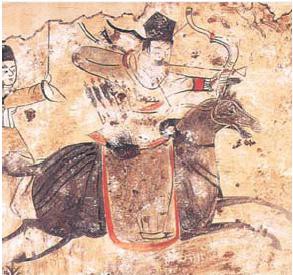
The Northern Wei dynasty (北魏, 386–535) this ballad would therefore be identified with was founded by the Xianbei (鮮卑) tribe, a non-Han (漢) nomadic people. It’s important to note the language spoken by these peoples was likely a Mongolic one, and the name Xianbei is either a transliteration of their own demonym or, more likely, an exonym.

Furthermore, the depiction of a woman warrior runs against the image of the gentle and graceful ladies the literary tradition of Confucianism (儒家) favors, whereas tales of horsewomen with traits similar to Mulan’s—bravery, martial prowess, and military resourcefulness—do appear among the poems of the Northern tradition, such as The Ballad of Li Bo’s Younger Sister and The Black-Tailed Red Horse,⁴ both yuèfǔ from the same period as the Ballad of Mulan. Such songs make sense to the state of constant warfare in the region, making these traits admirable in individuals without regard to their gender. As the poem says in closing:

双兔傍地走,安能辨我是雄雌?

Two hares running side by side close to the ground, How can they tell if I am he or she?

This is the original Mulan, an independent, accomplished horsewoman, skilled with sword and bow, and with a keen mind for military strategy. She is not lacking in confidence in any way, is not in need of any training from anyone, doesn’t whine about hardship, and camps alone on her way to join the fighting. Neither does she fight for the couple of days the Disney film presents, but instead for 10 years, and those not easy ones:

将军百战死 […].

Generals die in a hundred battles […].

One element—Hua’s taking up of her aging father’s sword—was seized upon as an opportunity to change the story into a Confucian fable. Already in Guō’s work, he records a so-called “Second Mulan”, retelling the tale in the eighth century with significant revisions stressing Confucian virtues, in particular, filial piety (孝, xiào).

Where in the original, Hua declines a government post after returning from war triumphant, Tang dynasty (唐; 618–690, 705–907) official Wei Yuanfu (韋元甫) omits that part, as giving a woman political power would be inconceivable to his worldview. Finally, the first-person perspective of the original disappears, and an impersonal, moralizing third-person narration takes over instead.

I hadn’t known it when I began this piece, but apparently a live-action version of Mulan is set to be released by Disney two years hence. I’d like to see them treat the cultural issues with more sensitivity, peeling away the layers of appropriation the story has already undergone in China—which made it into a legend of Confucian orthodoxy in support of the empire—as well as steering clear of the ethnic biases Western media have applied to portrayals of Asians.

It is also my hope they present a proud, strong horsewoman from the Xianbei nomadic tribes fighting to defend her family and her homeland of the Northern Wei, perhaps with badass female warrior buddies instead of anthropomorphized animals and stupid macho dudes.


Addendum A

There was one additional point I think worth making, which I did not include in my initial post: the choice of the Huns, also known as the Xiongnu (匈奴), as the invaders that had to be fought off, always struck me as odd. The Huns’ activities in Asia were in fact fairly limited, and Mulan’s people, the Xianbei, supplanted them on the steppe, perhaps driving them to their better-known invasions of Europe. Shan Yu (Miguel Ferrer), despite being the villain, is strong, clever, skilled at riding, use of the bow and the sword, living off the land, and falconry; all things still associated with these Northern tribes. In short, I’d conclude his portrayal, minus the two-dimensional evil, is actually closer to an authentic Mulan.


Read subsequent articles in the DeDisneyfication series

Part 2 Addendum B: Your Western Wuxia Is Weak

Part 3A: “Hercules”: Myths and Mistakes

Part 3B: Doing Hera’s Work

Part 4: “Belle” Epoch

Part 4 Addendum: The Enchanted and the Postmodern

Part 5: Putting “Pocahontas” to Rest

Part 5 Addendum: Powhatan’s Mantle

Part 6: Trouble with Tarzan

Part 7A: The Wrong Rabbit Hole

Part 7A Addendum A: Curious Curation

Part 7A Addendum B: “Alice” in Revolt

Part 7A Addendum C: How “Alice” Grew Big in Japan

Part 7B: Alice’s Adventures in the Cousins War

Part 8: Guerrillas and the “Jungle

Part 9A: Through a Magic Mirror Marred

Part 9A Addendum: The Woods “Over the Wall”

Part 9B: The Sum of Its Versions

Part 9C: The “Snow White” Studio

Part 9D: Snowhaus

Part 10: The Little Less-Than

Part 11: Batmouse 3D

Part 12: Mork & Scheherazade


Read previous articles in the DeDisneyfication series

Part 1: Straightening out “Hunchback”


Notes

  1. 智匠 (Zhi Jiang), 《古今樂錄》 (Gǔjīn Yuèlù, Musical Records of Old and New), ca. 568 CE.
  2. 郭茂倩 (Guō Màoqiàn), 《木蘭詩》 (Mulan shi, The Ballad of Mulan),《樂府詩集》 (Yuèfǔshī, Anthology of Yuefu Poetry), an anthology of lyrical pieces from the Han dynasty (漢朝) through the Five Dynasties and Ten Kingdoms period (五代十國, second century BCE–10th century CE).
  3. Map by Khiruge, 2015.
  4. 李白 (Li Bai), 《李波小妹歌》 (Li Bo xiaomei ge, The Ballad of Li Bo’s Younger Sister), and 《紫騮馬》 (Ziliu ma, The Black-Tailed Red Horse), 701-762, both collected in 《全唐詩》 (Quan Tangshi, Complete Tang Poems), 1705. Coincidentally, Li Bai was also a friend of Du Fu.

Straightening out “Hunchback”

Disney’s myths and Victor Hugo (DeDisneyfication, Part 1)

Reading Barthes’ Mythologies helped me put my finger on what bothers me about the Disneyfication of fairy tales and other works. His definition of “myth” is nonstandard—here it is the creation of symbols. I almost always find the book misfiled in used bookstores and quietly repair their error. I jotted some notes about the systematic appropriation of the cultures represented by these tales and how they have been turned into bourgeois myths. But writing a piece so purely critical, though it might provide some entertaining venting of my spleen, seemed somewhat pointless and ultimately unlikely to win me any friends. And indeed, later in the book, Barthes himself cautions:¹

But when a myth reaches the entire community, it is from the latter that the mythologist must become estranged if he wants to liberate the myth.

He came to question the relevance of his work still further when corporations began to approach him to create such myths for them as well.

But then I encountered the excellent article, “Moana and Resistance Spectating”,² and realized this is what I had been doing to some extent and the taking back I’ve tried to do with Norse esoterica would be a much more constructive approach to Disneyfication than a vitriolic rant.

I’d also like to acknowledge a positive aspect to these Disney films—they expose a broad audience to works they might otherwise know nothing about. My hope is this fosters curiosity about the source material, rather than simple acceptance of the symbols the studio has created.

First, let’s define our terms: Disneyfication, as I’ve already noted, involves cultural appropriation and the creation of bourgeois myths. It is one of the most aggressive forms of Hollywoodization, part of which involves a nearly fetishistic focus on the redux, and another is the culture of the final cut which, if it encounters a work of art, seeks to render it into entertainment instead.

A classic example of both comes in the Hollywoodization of the 1985 German film Zuckerbaby into 1989’s horrifically saccharine Baby Cakes: The award-winning German film has the main character, Marianne (Marianne Sägebrecht), throw herself under the wheels of the train being driven by the lover (Eisi Gulp) who has spurned her. Whereas in the nearly unknown US version, the protagonist, renamed Grace (Ricki Lake), decides to quit being afraid of what the world thinks of her and to follow her dreams, becoming a beautician, while Rob (her lover, Craig Sheffer) realizes his girlfriend (Cynthia Dale) will never accept him as he is and he really loves Grace.

Please don’t imagine for a single second the first one is regressive and horrible and the second is empowering—go watch them (if you can even stomach the latter version) and you’ll see a lion whose teeth have been extracted. But as they say in Hollywoodese, “That one wasn’t going to sell a lot of popcorn.”

So now to the task—first up: The Hunchback of Notre Dame.

This infinitely forgettable mid-’90s mediocrity derives from a Victor Hugo novel, so it differs a bit from typical Disney fare. As with nearly everything Disney, there are numerous reduxes from which they have drawn and adapted this version, including 10 films, nine theatrical versions, three ballets, two TV miniseries, and two musical retellings, to say nothing of all the translations into various languages over the years. The 1939 version, starring Charles Laughton and Maureen O’Hara in particular, seems to have been the basis for the Disney film. Rather than breaking down the entire plot structures of the Hugo and Disney versions, I’ll focus on a few key differences.

Let’s begin with the title: the original was called Notre-Dame de Paris, placing the focus not on the characters, but on the cathedral itself, as the book was ultimately about the architecture of Paris. Hugo hated the English title, which shifted this emphasis and prompted filmic adaptations criticized as vulgar freak shows. If anything, the double meaning of the title was a reference to Esmeralda, as the dame—“lady” of the cathedral she claims sanctuary in, and who, ultimately, is the main character rather than Quasimodo.

The hunchback is another metaphor for the cathedral that is his home, which in turn is one for Parisian architecture, and even that of every city of significant age: though its features can be seen as monstrous (or at least asymmetrical), ultimately they are a part of a character with a heart of gold. This theme of the majestic messiness of reality runs through the whole work, encompassing, in particular, the relationships among the characters. The book is largely a response to a movement to renovate the city afoot in Hugo’s time, of which he was not a fan:³

Thus it is that the wondrous art of the Middle Ages has been treated in almost every country, and especially in France. In its ruin three sorts of inroads are distinguishable, having marred it to different depths; first, Time, which has insensibly made breaches here and there, and rusted its whole surface; then, religious and political revolutions, which, blind and furious in their nature, have tumultuously wreaked their wrath upon it, torn its rich garment of sculpture and carving, shivered its rose windows, shattered its necklaces of arabesques and quaint figures, torn down its statues, here for their mitre, there for their crown; and lastly, changing fashion, growing ever more grotesque and absurd, commencing with the anarchical yet splendid deviations of the Renaissance, have succeeded one another in the unavoidable decline of architecture.

Nonetheless, as implied here, he is willing to accept the changes made, but feels these should stop, leaving the cathedral, the city, the world in this imperfect yet glorious state.

It’s easy to see why Disney would not have been comfortable with this message even if this amount of nuance was anywhere near their wheelhouse, as their stock in trade involves creating sterile consumerist utopias on swampland. Rather than dealing with these metaphors, we are left instead with an empty shell.

Next, let’s move to “Quasi’s” (Tom Hulce) cutesy gargoyle sidekicks, Victor (Charles Kimbrough), Hugo (Jason Alexander), and Laverne (Mary Wickes/ Jane Withers). Disney always likes to insert characters like these, as well as, in this film, a horse named Achilles (apparently entirely to set up the laff line “Achilles, heel!”). Certainly, I understand their thinking; many of the dialogues internal in novels and fairy tales become conversations between these creatures and the people they are associated with—not to mention the toy sales. But this trio is particularly weird and unneeded, and while the names of the first two form a dubious homage to the author from whose work the film is drawn, the last one is wackily named after one of the Andrews sisters.

On to the Cour des miracles: Disney’s Esmeralda (Demi Moore/ Heidi Mollenhauer) entrusts Quasi with a pendant containing a map to the gypsies’ hideout, the Court of Miracles, which proves problematic when it falls into the wrong hands.

This is simply ridiculous. While the many slums of Paris were known by this collective name, the film implies there is one such place, and its location is somehow secret. Some claimed these were simply squalid cesspits of lawless villainy, while others held guilds of thieves and beggars organized their trades, and, in order to be exempt from “taxes” to the Grand Coësre, archissupots provided lessons on argot to new recruits. The Grand Coësre is the head of the thieves’ and beggar’s guild and an archissupot is a scholarly rogue—both themselves argot terms.

These areas, which inspired both Notre-Dame de Paris and Les Misérables, were cleared, an effort beginning in 1667, and was finally completed by the Haussmannization of Paris in the late 19th century. Georges-Eugène Hausmann’s renovation of Paris occurred between 1853 and 1870, following the publication of Notre-Dame de Paris, so even though his work was celebrated, Hugo’s warnings were not heeded. Ironically, one of the 12 roads that makes up the Étoile is Avenue Victor-Hugo.

Finally, the endings of the two works differ the most dramatically: In the animated film, Frollo (Tony Jay) “accidentally” falls to his death in the molten lead-flooded streets surrounding the cathedral, Esmeralda marries Phoebus (Kevin Kline), the Captain of Frollo’s guard (Captain of the Archers in the novel). and in a Baby Cakes-esque turn of events, Quasi is accepted by society.

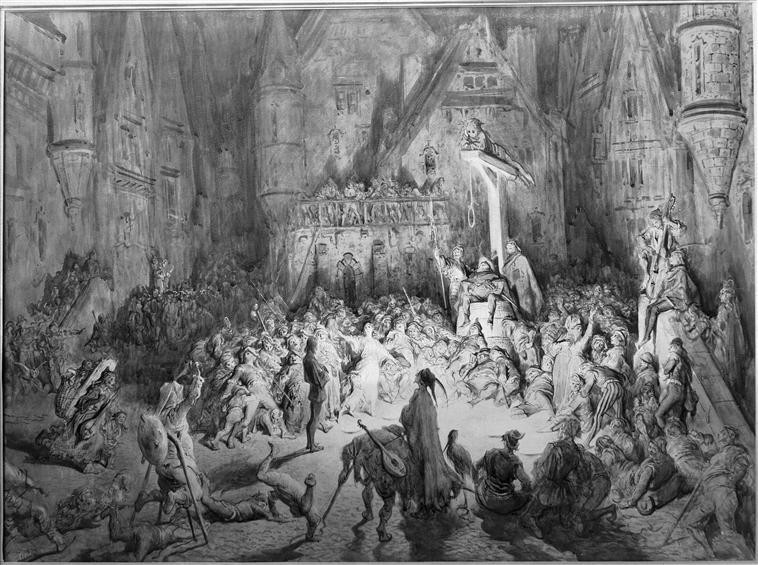
Hugo, on the other hand, has Frollo turn Esmeralda, condemned of attempting to murder Phoebus, over to the troops, and when he laughs during her hanging, Quasimodo pushes him from the top of the cathedral to his death. The hunchback later finds Esmeralda’s dead body at the mass grave for criminals at Montfaucon and remains there to eventually perish from starvation. Their intertwined skeletons are found some time later, which, when an attempt is made to separate them, crumble into dust.

In closing, I actually doff my hat to Disney for embracing one dark element of the original in particular: Frollo’s mixture of lust and loathing for Esmeralda, treatment of which, mainly embodied in the musical number, “Hellfire”, barely skirted a PG rating. It would have been easy to leave out, but the creative team seems to have successfully fought the studio execs to keep it in. As it’s ultimately a commentary on the Catholic Church’s hypocrisy, it’s a fairly charged theme to have made it into such an otherwise vanilla effort.


Read subsequent articles in the DeDisneyfication series

Part 2: Making over “Mulan”

Part 2 Addendum B: Your Western Wuxia Is Weak

Part 3A: “Hercules”: Myths and Mistakes

Part 3B: Doing Hera’s Work

Part 4: “Belle” Epoch

Part 4 Addendum: The Enchanted and the Postmodern

Part 5: Putting “Pocahontas” to Rest

Part 5 Addendum: Powhatan’s Mantle

Part 6: Trouble with Tarzan

Part 7A: The Wrong Rabbit Hole

Part 7A Addendum A: Curious Curation

Part 7A Addendum B: “Alice” in Revolt

Part 7A Addendum C: How “Alice” Grew Big in Japan

Part 7B: Alice’s Adventures in the Cousins War

Part 8: Guerrillas and the “Jungle”

Part 9A: Through a Magic Mirror Marred

Part 9A Addendum: The Woods “Over the Wall”

Part 9B: The Sum of its Versions

Part 9C: The “Snow White” Studio

Part 9D: Snowhaus

Part 10: The Little Less-Than

Part 11: Batmouse 3D

Part 12: Mork & Scheherazade


Notes

  1. Roland Barthes, Mythologies, 1957.
  2. Richard Wolfgramm, “Moana and Resistance Spectating”, November 2016.
  3. Victor Hugo, Notre-Dame de Paris (The Hunchback of Notre-Dame), 1831. I’ve used J. Carroll Beckwith’s 1892 translation.

Wanting to be Magic

A starry robe, a pointy hat, and thou, Rilke (Translating Poetry, Part 3)

Poring as I have over Borgesessays on translation, particularly of poetry, I still nearly missed a line finally revealing his thoughts on the topic:¹

Words become incantations and poetry wants to be magic.

Even his essays are far from straightforward and must be carefully read. This sentence is drawn from “Two Ways to Translate” (“Las dos maneras de traducir”), and it is not at all elaborated on.

Nonetheless, I find myself in accord: the process of reading poetry is different from reading other types of works. Or at least it should be, although there are some works of prose for which the process is like reading poetry—Finnegan’s Wake comes to mind. The poet’s choices must be carefully made, but even more is demanded of the reader, who must study and perform the magic. You can’t simply glean the meaning and move on; each line, and maybe each word, must be lingered over, read aloud, and allowed to reverberate, whereas in normal reading even moving your lips provokes derision.

There is perhaps no better example of this than Rainer Maria Rilke, whose work is often described as mystical and lyrically intense. His words are invocations, using haunting images to express highly existential themes, such as the difficulties of communion with the ineffable in the disbelief, solitude, and profound anxiety of the fin de siècle.

So when a friend posted a version of a Rilke poem on Facebook, it caught my eye:²

Understand, I’ll slip quietly
away from the noisy crowd
when I see the pale
stars rising, blooming over the oaks.
I’ll pursue solitary pathways
through the pale twilit meadows,
with only this one dream:
you come too.

Some great stuff here, but again, I wanted to see it as Rilke wrote it, which was:

Weisst du, ich will mich schleichen
leise aus lautem Kreis,
wenn ich erst die bleichen
Sterne über den Eichen
blühen weiß.
Wege will ich erkiesen,
die selten wer betritt
in blassen Abendwiesen—
und keinen Traum, als diesen:
Du gehst mit.

I found the original more haunting and beautiful and containing themes I related to. It’s just two sentences, but invites the imagined lover/ reader to flee the urban masses into a luminous countryside.

There’s also an ABAAB rhyming scheme present, but I remain committed to free verse as being the best choice for the translation of poetry. The rhymes rely mainly on the -en endings of both plurals and infinitives in German (used for all the As).

While it might seem a strange aesthetic to apply, Einstürzende Neubauten frontman Blixa Bargeld’s lyrical style of using single-syllable words rich with multiple meanings is one I’ve long since adopted in my own writing, and seemed especially appropriate here. At one point, he simply made a list of these evocative words and used them as a lyric, described as “sound scenery”. “Compressors in the Dark”, whose refrain, “ich gehe jetzt” (“I’m leaving now”) is nearly a reply to Rilke.³

These are a few of the sensibilities that went into my version:

Know that I will slink
quietly from the noisy crowd,
when first I sense that ghostly
stars crest the oaks
blooming white.
I’ll choose to make tracks
where a rare few walk
in pale twilight meadows—
with no dream but this:
You go with me.

The final line I deemed then, and still do, a bit overly literal, and perhaps demonstrative of the limitations of the English language, but perhaps this is a result only of my own “exhaustion” as a translator, as Borges would say. I remarked at the time, and still fancy the Japanese phrase issho ni (一緒に) might express the idea better than English, or even the original German could. It is often translated simply as “together”, but as with a lot of the diction we’re dealing with, the nuances run deep.


Read previous articles in the Translating Poetry series

Part 1: Faithful Treason

Part 2: The Middle Way


Notes

  1. Jorge Luis Borges, “Two Ways to Translate” (“Las dos maneras de traducir”), 1926, collected in English in On Writing, Suzanne Jill Levine ed., 2010.
  2. Rainer Maria Rilke, “Weisst du, ich will mich schleichen” (sometimes called “Passages” in English, but actually untitled), collected in Advent, 1897. I haven’t been able to identify the translator of this version, but it’s ubiquitous.
  3. Einstürzende Neubauten, “Compressors in the Dark”, Supporter Album No. 1, 2003.

The Middle Way

From Virgil to Dante through the lens of Borges (Translating Poetry, Part 2)

In “Two Ways to Translate”, Jorge Luis Borges identifies these “two ways” as classical and romantic. His description of the former is:¹

The classical way of thinking is interested only in the work of art, never the artist. The classics believe in absolute perfection and seek it out. They despise localisms, oddities, contingencies.

And the latter:

Romantics never seek the work of art, but rather the man himself. […] That reverence for the I, for the irreplaceable human difference that is any I, justifies literal translations.

The essay concludes with two representative translations of the first line of Martín Fierro, an epic poem about the titular gaucho by Argentine José Hernández:²

Aquí me pongo a cantar. Al compás de la vigüela

We can translate them in a long-winded literal way: “In this same place where I am, I am beginning to sing with my guitar,” and with high-sounding paraphrase: “Here, in the company of my guitar, I begin to sing, […].”

For comparison, the “standard translation” offered in the essay is:

And here I begin to sing—to the rhythm of the vihuela.

Although Borges taxonomizes the classical and romantic types, though he does decry poetic cliché, he does not seem to favor either. And nor do I. Elements of each seem appropriate to me in different situations.

By way of illustration, let’s look at some Dante. When Robert Pinsky’s translation of the Inferno came out, I heard good things and picked it up. A passage I had not remembered from my previous reading caught my eye:³

In that part of the young year when the sun
Goes under Aquarius to rinse his beams,
And the long nights already begin to wane

Toward half the day, and when the hoarfrost mimes
The image of her white sister upon the ground—
But only a while, because her pen, it seems,

Is not sharp long—a peasant who has found
That he is running short of fodder might rise
And go outside and see the fields have turned

To white, and slap his thigh, and back in the house
Pace grumbling here and there like some poor wretch
Who can’t see what to do; and then he goes

Back out, and finds hope back within his reach,
Seeing in how little time the world outside
Has changed its face, and takes his crook to fetch

His sheep to pasture.

First, this simile that begins Canto XXIV is one of the longest in the work, a welcome reprieve from Dante’s extensive revenge fantasies and classical references. Second, I loved the bucolic imagery which then shifts to refer to Virgil (the peasant) who is leading Dante (his flock),⁴ which, of course, is also classic Christian symbolism.

But the structure is frankly annoying—basically the last bit of each sentence has been shoved into the next line throughout, and the rhymes are pretty weak. An excellent illustration of the problem of trying to preserve an original’s meter, especially Dante’s intricate, interlocking terza rima scheme. Sun/ wane, beam/ mimes/ seems, ground/ found/ turned, rise/ house/ goes, wretch/ reach/ fetch are some rough rhymes, but it seems meter and rhyme were Pinsky’s secondary focus, as he says in his Translator’s Note, apologizing for the difficulties. I’ll let him off the hook just a bit by noting even in more rhyme-rich Italian, and with all his poetic skill, Dante rhymes both tempra and faccia with themselves in the passage.

It was second nature to consult the original:⁵

In quella parte del giovanetto anno
che ’l sole i crin sotto l’Aquario tempra
e già le notti al mezzo dì sen vanno,

quando la brina in su la terra assempra
l’imagine di sua sorella bianca,
ma poco dura a la sua penna tempra,

lo villanello a cui la roba manca,
si leva, e guarda, e vede la campagna
biancheggiar tutta; ond’ei si batte l’anca,

ritorna in casa, e qua e là si lagna,
come ‘l tapin che non sa che si faccia;
poi riede, e la speranza ringavagna,

veggendo ‘l mondo aver cangiata faccia
in poco d’ora, e prende suo vincastro
e fuor le pecorelle a pascer caccia.

And, as I have suggested, my version is indeed a mix. Just as with the Aeneid passage, I feel it’s important to understand the original and its context, but it’s still more important the metaphors of the original make sense in English:

In that moment of the fledgling year when the Sun douses his crown beneath Aquarius and the night becomes half a day’s length,

When the Frost traces the image of her white sister upon the ground, even though her quill’s sharpness lasts but briefly,

The peasant, low on fodder, rises and gazes out, and seeing all the countryside gone pale, slaps his thigh,

He turns back indoors, lamenting to and fro—a poor wretch who knows not what to do; but then, returning, his hope revives,

Seeing how the world’s face has changed in so short a while, takes up his staff and drives his lambs to pasture.

I won’t digress into a belabored discussion of the reasoning behind each word I chose, but just to give one example, the original has crin—“hair” as what the sun is “putting under Aquarius”, and Pinsky has the sun “rinse his beams”, both of which seem strange to my ears. I gave the sun a crown, which seemed a more sensible image using its triple meaning as the item of regalia—and of course the sun is king of the heavens—and the sun has an aurora using the cognate word corona, and also the top of the head. In any case, I think my overall rendering lets the depth and resonance of the original shine through.


Read subsequent articles in the Translating Poetry series

Part 3: Wanting to be Magic


Read previous articles in the Translating Poetry series

Part 1: Faithful Treason


Notes

  1. Jorge Luis Borges, “Two Ways to Translate” (“Las dos maneras de traducir”), 1926, collected in English in On Writing, Suzanne Jill Levine ed., 2010.
  2. José Hernández, Martín Fierro (originally, El Gaucho Martín Fierro), 1872., quoted in ibid.
  3. Robert Pinsky, Canto XXIV, 1–15, The Inferno of Dante: A New Verse Translation, 1994.
  4. That is, the characters of Dante and Virgil.
  5. Dante Alighieri, Inf. Canto XXIV, 1–15, Divina Commedia, ca 1308–21.